When it comes to building a global campaign, most people will naturally think of visual and copy content – expressing the universal truth with locally relevant images and articulating the global messages with copy that resonates with the local audiences. But telling the brand story isn’t just about what images and copy, an aspect of a global campaign that not many people invest in is how the brand “sounds”.

I am not referring to designing just a sonic element or trigger that appears in the campaign – the Intel’s “Bong”, the Nokia’s “Grade Vals”, or Motorola’s “Hello Moto”. These are valuable addition to the execution that could add memorability and longevity to a campaign, but they are not enough to help communicate the emotional side of the brand message. Consumers have also entered into a truly connected world where the use of sound cohesively across all touchpoints – online, offline, events and a diverse form of customer interactions. The sonic branding has to act as the glue for communications across time, territories and touchpoints, locally and globally.

The recent manifestation of the HSBC’s “Together We Thrive” global platform perhaps have done just that. A series of commercials have been launched communicating the message of “shared prosperity” (inspired by the Chinese name of HSBC 滙豐) and the diverse nature of the brand, building on the visual identity that the outdoor campaign kicked off last year. To allow the core brand message to be flexed in each local region, a bespoke piece of music has been composed, created by Jean-Michel Jarre, that allows endless local interpretations expressing intricate nuances.

Orchestrating a global campaign requires great leadership and vision from the top, and complete collaboration at the local level. Music can be a shared “language” that everyone can contribute and build on.

On an execution level, music, rather than just an add-on to an idea, can also become a platform to support multiple activation between customers and the brand. I am looking forward to seeing how this will develop in the coming months.

The Sound of HSBC series:

“Orchestral” edit

“Stadium” Edit

“Connected” Edit

“In Flight” Edit

“Wayfoong” Edit

“Mindfulness” Edit

“Inspiration” Edit

Change_pencil_cropped

There’s no doubt that the role of creatives has changed dramatically. This year, we have seen evidences that companies of all kinds are seeking a different kind of creatives to fit to the changing model that they operate in. WPP has announced their repositioning as a “creative transformation company”, one of their new focuses is to help clients in “omnichannel” commerce and marketplaces. Global marketers, such as Unilever, Adidas and Coty, want a simpler, faster, more joined-up approach by bringing some of the key talents, including creatives, closer to the brand.

The new breed of creatives is now being sort after not just by traditional agencies (or agency networks), but consultancies (dare I say “cagency”), media agencies, media owners, co-creation partners, and in-house.

But instead of thinking the role of creatives have changed because of the changing landscape of the business, I think that it’s the other way around.

The advertising business hasn’t changed fundamentally. We have.

Creatives no longer think, plan, collaborate, produce the same way as we did before.

We think holistically

While the overarching big idea is still the soul of it all, the choice of media and how they interact with each other has become increasingly important.

Today, the real craft is not just to take a complicated idea and reduce it to a long form TV commercial, but to make sure the message builds up throughout the consumer’s journey. What motivates us is no longer just creating that one single piece of masterpiece but constructing the intricate relations between each channel.

Having a holistic view of user experience is increasingly requested from creatives, as we are the ones who should be mastering the “how” and “why”, not just the “what” of communications.

Taking that to one level, the ultimate satisfaction comes from knowing that the idea can also be reinterpreted in different culture and market fluidly and with such richness that the impact multiplies. In order to do that, we often don’t work within a traditional creative team structure – we collaborate with creatives across any discipline, often across borders.

We act fluidly

We respond to a brief by understanding the business problems and come up with creative solutions to make that happen. The traditional format of a creative brief that limits executional possibilities no longer works, as our real challenges are creating non-traditional solutions, rather than limiting to a narrow brief.

We no longer tie ourselves up to specific titles. Copywriters are more than just crafting messages with the power of words, but the ability to tell stories through whatever means, and visualise how messages can we carried over to another medium. Anyone who judge copy just by looking at it on one single medium do not understand how real copy of today works.

We have a purpose

Brands need a purpose. Creatives do too. If Nike’s purpose was just all about making great shoes, then there won’t be a space to “dream crazy”. And the idea to keep the brand relevant by reinforcing the brand value of giving people a brave voice through an ad featuring Colin Kaepernick, among other strong-minded athletes, would never have seen the light of day.

Seeking out the right purpose to apply on our clients’ brands is becoming one of the skills that creatives should have. It’s not about just any purpose, but mapping and matching the relevant ones for the client takes genuine creativity. In a way, we transform the mundane selling into something redeeming and enriching.

We keep changing

Will 2019 brings to us a whole new angle of changes? Will the in-house creative team models continue to work (we are already seeing how Intel’s in-house function has scaled back, and Unilever is looking doubtful over the negative impacts on creativity). Will increased involvements of technologies such AI and VR means creativity and our opportunities will become broader, and our scope will be greater to make an impact for brands?

Things are changing and will continue to evolve. There is no such thing as a static model now. What changes have you experienced so far? I like to hear from you.

oliver-kiss-492188-unsplash

Advertising is a reflection of our times. It always has been.

Advertising of brands, like music and movies, can be a social message in itself. It influences how we look, what we eat and sometimes how we see ourselves.

So when brands join force with another global and cultural phenomenon, such as sports, it can be even more powerful.

Brands want to be more “human”, and are a lot more open-minded to have a point of view. They understand in order to do this genuinely they need to allow people to have a voice.

Athletes understand their roles in the society and are more authoritative than ever to choose what brand they like to use as a platform to allow them to have a voice, and represent their values.

But in a commercial world, brands have a lot to be accounted for.

Brands have every pressure from the shareholders to invest only in messages that guaranteed sales growth.

Brands have every right to avoid associating with sensitive political issues.

Brands have all the reasons to communicate a message that appeals to “everyone”.

Thank goodness Nike is not such a brand.

The recent Nike campaignmakes no direct reference to any political viewpoints, but by featuring Colin Kaepernick (among Lebron James, Serena Williams and a slew of other athletes), the association to his protest against racial injustice, and decided to kneel rather than stand for the national anthem before a 2016 National Football League preseason game is clear.

What’s so compelling about the Nike message is not because it’s charged with one of the most sensitive political messages at the moment, and confronting face to face with one of the most controversial leaders in American history, it’s the pure fact that this is so true to what we know about the brand – someone who has the courage to speak his/her mind, and giving people of any background the space to expression theirs.

Not every brand can do this though. Any brand who hasn’t got that long established history of credential and integrity, will come out feeling sheer opportunistic.

The clever approach of Nike is that it does not have to express a single point of view but just create a stage for the broad range of people to express the breadth of their standpoints. In the process, bring people of many different backgrounds together.

It makes the brand feels more human, an advocate of freedom of speech rather than siding with one point of view.

True, after the news went viral, it pulled waves of both support and backlash, even boycott. The brand’s shares dipped in reaction to the news. But on the other hand, the campaign also received millions of dollars of media exposure. Perhaps all these have fulfilled the brand’s calculated cost benefit analysis, in communicating the message of an inclusive world for all.

Even if some people don’t agree with what you are saying, they will appreciate that you have the courage to say it and speak up.

Perhaps it’s really time for brands to believe in something, even if it means sacrificing everything.

IMG_3093

IMG_3095

video wall_1

The increasing popularity of using pictures and video to share on social media is driving a huge trend for using moving images to tell the brand story.

Speaking at an event in June this year, Facebook’s Nicola Mendelsohn endorsed this trend and said she would put money on Facebook “becoming all video over the next five years.”

No wonder clients want videos – lots of them.

Consider these stats:

  • Facebook grew to 8 billion average daily video views from 500 million users in Q3 2015. The jump from just 4 billion video views per day in Q2 the same year was massive.
  • More than a third of Snapchat’s daily users create their own “Stories”, broadcasting photos and videos as chronological narratives, and users are watching 10 billion videos a day on the application, up from 8 billion in February this year.
  • The time people now spend watching video on Instagram has increased by more than 40 percent in the last 6 months.

And that’s just a glimpse into the burgeoning popularity of video content.

Interestingly, we’re not just watching more video, we are becoming more discerning about it too.

We expect videos to offer a more immersive experience – for example, the 360-degree videos that let us move around and explore a certain space, and interact with responsive elements. The 360-degree video from Expedia, created by 180LA in partnership with Tourism Australia, lets viewers lead their own exploration of the dramatic land- and sea-scapes of Australia. Since making its debut on YouTube in June, it has already gathered more than 3 million views.

Tourism Australia makes the best use of immersive videos

We also have a totally different perception of “quality” for videos. Instagram used to be less aesthetically forgiving than Vine, but I think the line is going to be blurred.

Then comes personalization. Amazon has just started dynamic video ads as a pilot, using browsing data to decide what creative to show prospective shoppers on the fly and tailoring itto individual users’ interests.

The media, more than ever before, is becoming the message. And it is constantly evolving. Even the greatest creative will fail if it is not delivered via the latest and most relevant visual format.

The Video Revolution

There are countless forms of video content. At one end of the spectrum, you have the most practical eLearning or product videos delivering informative / educational content, while at the other you might have highly engaging, entertaining and stylized content that tells a brand story. Then there’s everything in between. All forms of video content serve a very different purpose and certainly take a very different type of talent to create and produce.

In addition, every channel demands a different format and creative approach in reaching a high level of engagement. And as every brand is likely to adopt a multi-channel strategy, we are going to see more and more services dedicated to curation. Brands will need to have a central hub overseeing the creation of videos across all touch points and bring them all together.  After all, in the eyes of the consumers, the different types of video content should all be channelling the same brand.

So, what type of video content is suitable for your brand? What are the latest trends? Let’s take a look at some of my recent observations.

Long Form vs. Short Form

The common belief is that short videos, with text overlays instead of sound, are becoming more popular. They grab attention quickly and, when designed appropriately, they can produce an instant emotional response.

However, that doesn’t mean long videos won’t work. It’s all down to the creative idea. Brands now understand that if the content is engaging and rewarding to view, consumers will be willing to seek out the longer form.

Gautam Anand from YouTube APAC recently remarked on the trend for longer video ads in the region. The most popular ads from 2015 averaged more than four minutes. Four of the top ten YouTube videos were more than 5 minutes in duration. The single most viewed ad, from Malaysia Airlines for the Chinese New Year celebration, is a majestic 12 minutes long!

Sound vs. Silence

Voice-overs, when produced cheaply and unprofessionally, can wreck even the smartest and most beautiful content. Worse than being ineffective, they can actually damage the brand. In this case, silence is definitely golden.

Another reason why videos for social channels are increasingly being created without sound is that, in many cases, people are in locations where they can’t consume the audio. Savvy brands ensure their idea resonates even with people who haven’t turned their speakers on.

“Tiny Magic” Videos from Lostmyname can be fully enjoyed with no sound

As video consumers become more discerning, the bar for quality video is raised higher every day. Even the humble screen text is enjoying a renaissance. It’s not just about adding functional subtitles or uninspiring supertitles any more. Visualizations and overlays are getting more sophisticated all the time, raising consumer expectations, and therefore requiring us to plan ahead, to include them as part of the storytelling rather than an afterthought.

Local vs. Global

Can video content really go global? Just because you can (technologically speaking), it doesn’t mean to say you should.

If we know how crucial it is to draw emotional responses from consumers, we know that we have to reach them not just locally, but somehow personally. Does anyone really still believe this can be achieved with one version of one video that has not been even adapted or localized?

Inevitably, global brands do have finite resources, so it can be hard to create different content for every platform. Not to mention tailor-make it for each market with its different language and culture.

The key is to think global from day one – to take a brand’s core assets from the beginning and consider how the local audience will consume them.  This will allow you to think about how to tailor your content for different platforms, and how certain assets can be shared for global releases.

Localization of video content has come a long way from the days when subtitling or dubbing were the marks of a successful international brand. As an example of just how far, take Coca Cola, who recently launched Coke TV in the UK and Ireland. Instead of globally developed TV ad campaigns featuring global celebrities, the channel is aiming to target young local audiences via YouTube. Fronted by two YouTubers, Dodie and Manny, each episode will be based around the themes of gaming, sport and music. The appeal is obviously very local (or at most regional). It will be interesting to see if Coke TV rolls this tactic out globally.

CokeTV GB

CokeTV France

One thing is certain – for video content to go global, pre-production and planning are essential. Great videos, like any other content, demand the time-honored ingredients of success: a deep understanding of the consumer, superlative storytelling, and inspirational creative work. If you can combine that to deliver stories to people in each market in a new, exciting, and locally relevant way, then you will have won them – and quite possibly won the world.

choose happiness

Coca-Cola recently announced their “One Brand” strategy. A series of changes affecting the advertising campaigns for the portfolio of brands, and the detail packaging design alignments were announced. This shift from brand-specific advertising will see the brand uniting all four distinct brands – classic Coke, Diet Coke, Coke Zero and Coke Life, logically under one master brand marketing banner: The Coca-Cola family. The objective is to drive synergy across the portfolio.

The overriding tactic is that Coca-Cola is the only thing the company will position and give meaning to, and underneath it will sit different product variants. Each variant will be equal in the overall portfolio but “won’t have a meaning attached to them.”

Coca-Cola continuously ranked at the top in the world’s global brand rankings over the years. In 2013, according to The Best Global Brand from Interbrand, it slipped from the top spot after 13 years to third place. Perhaps it was the “wake up call” for the brand. But was the dilution of brand strength really due to its diversification into campaigns for individual product variant?

The strategy was an outcome of recent consumer research, which revealed that 5 out of 10 of consumers don’t know what differentiates each product in its portfolio. For example, people don’t know that Coke Zero has no sugar and no calories. Consumers are also unclear about the different between Coke Zero and Diet Coke.

Coca-Cola considered the company’s efforts to build personality behind its individual brands has become an obstacle to consumers’ understanding of the products.

Building meaning in the communications will not affect consumers’ understanding of the product. A brand under the brand halo itself could become an identity in its own right, as opposed to just being seen as one of the variants. I believe the heart of the matter is when the “meaning” is not connecting with what the product represents, then it ends up a waste of effort.

Product differentiation is increasingly hard for brands operating under portfolio brand strategy. From FMCG brands to service brands, the fragmentation of brand messages often causes confusion in consumers’ mind. When HSBC launched the “Personal Economy” platform for their “Premier Account”, was it distinctive enough to help consumers to clearly differentiate among the “Premier”, “Advance” and “Business” accounts? Do consumers clearly recall the commercial starring Jude Law was for Johnnie Walker’s Blue Label? What about the differences among Red Label, Black Label, Gold Label Reserve and Platinum Label? How does the whole range connect with the brand message of “Keep Walking”?

The list goes on.

In the case of Coca-Cola, should the “Open Happiness” platform be given an even bigger playground with universal appeal? Or should it be changed to a more rational statement such as “Choose Happiness”?

The “One Brand” strategy will be executed on campaign level and on product level, and will affect agencies working within the framework. Some of the changes can be summarised as:

  • The newly evolved brand tagline “Choose Happiness” will be launched in Great Britain before moving to the local markets globally. It will be hugely interesting to see how the tagline could be adapted.
  • New brand campaigns will focus on the brand idea of happiness and optimism and will roll out in Great Britain, Ireland, France, Belgium, Netherlands, Nordics and Spain.
  • All advertising campaigns from May in Northern Europe will feature all four products, with the lower and no sugar Coca-Cola variants presented in the final frames of all Coca-Cola TV ads.
  • Although all four variants will feature in future campaigns, Coke will be able to spotlight or “hero” whichever variant is relevant to the campaign, through visual representation and strategic executions.
  • Individual campaigns for individual product variant will be scrapped. That includes some of the newly launched campaigns such as “Regret Nothing” for Diet Coke.
  • Brand message will suggest there is a “Coca-Cola to suit every taste” by more clearly communicating product differentiation rather than personality – to enable consumers to make informed choices.

On the product level, some of the strategic changes include:

  • New packaging will see each variant being given the “same design” and set of characteristics, such as the iconic Coca-Cola script, ribbon and layout.
  • The “Cola-Cola” trademark will be made larger and more visible, with more presence of the iconic red colour.
  • Text will also be added to the front of Coke Zero, Coke Life and Diet Coke to enable consumers to better understand the range of products and the distinctive attributes of each. On the front of Coke Zero cans, the descriptor “zero sugar – great Coke taste” will be strategically repositioned in the foreground.
  • There will be an introduction of colour coded front-of-pack labelling showing fat, saturated fat, salt, sugar and calories.

All these design changes are aiming to create a more visual “common identity” across the brands. The more unifying set of characteristics that the brand shares.

We are already seeing some of the new ads hitting major touchpoints.

In brand advertising, the big change can be seen in the latest global print campaign starring Marilyn Monroe and Elvis in celebration of the 100 anniversary of the brand’s contour bottle.

cc100_ooh_heritage_elvis_landscape_web-under-embargo-2nd-March-1002x752

In product-as-hero communications we see a deliberate attempt to present the range in equal light. But will the execution help the different product characteristics come to life when “product truth” are being communicated in a much more straightforward way? Or will the lack of “meaning” turn the ads into something better fit for corporate presentations? The result is yet to be discovered.

2015-03-13 18.24.19

New strategy brings new collaborations

At the end of the day, any new strategy won’t succeed without collaboration across the board. Here are some of my predictions:

Communicating product truth for each product variant is important but cannot be done without the support of a meaningful brand message. Product message needs to be connected with the brand’s umbrella message.

It’s not a choice between logic and magic, but a balance.

On a positive side, I think the strategy will be instrumental in paving the way to a more efficient and single-minded global campaigns. But this will only be achieved through rethinking how the brand campaigns are created and implemented across each product in the portfolio.

Doing it well, it will allow the brand to innovate into the future with a single voice, and do it in a way that doesn’t require the brand to invest in creating a new entity every time – a much more flexible approach in accommodating product manifestations.

I can also see there will be a need for tighter collaborations among the creative agencies handling different channels. Leadership will probably be driven centrally, where collaborations among agencies are encouraged and well facilitated.

The lead creative agency, on the other hand, needs to spearhead the development of the big brand idea, and create a strong creative platform on which messages of individual brand in the portfolio can build on. More important, creatives need to think of media-neutral platforms and not media-centric ads. Each agency needs to put their egos aside and completely understands the DNA of an idea and be able to expand it beyond any boundaries of a specific media.

For a global brand with local connections and meanings, any new creative platform needs to offer each country an opportunity to interpret its own “moments of happiness” and the brand’s role in those. The brand should tap into local talent to add to the effort to their marketing programs through joint global initiatives.

Coca Cola_shaes of happiness

It’s Chinese New Year on February 19. The Spring Festival is regarded as the most vibrant gift giving and shopping season in China, and therefore one of the major push for many leading brands. Many global advertisers follow the same old formula year after year, while others try to break away from the norm and do something different.

Pepsi curated a “crowd-sourced video” inviting consumers to submit 15-second videos via Mei Pai 美拍, a local mobile video app, to form a tribute to family reunions. The crowd-sourced final cut video will be eventually simulcast on the big screen in New York’s Times Square, symbolically bringing something local to a global stage. At the same time, the “Bring Happiness Home” themed promotion will deliver over 2000 postal parcels to help the mothers in the remote mountainous regions get through the cold winter days.

Apple, on the other hand, had taken this opportunity to unveil their first TV commercial produced specifically for the China market.

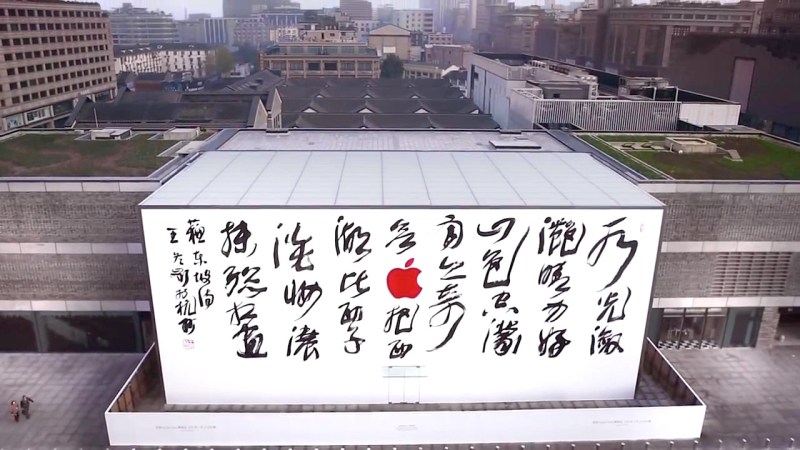
It has been an epic few months of localization activities for Apple. Recently they have opened five new stores timed right before the Chinese New Year. Four of the stores are in brand new cities for the brand including Zhengzhou, capital of central China’s Henan Province, West Lake in Hangzhou, Zhejiang Province. In each location, they have strategically partnered up with local artists such as Wang Dongling and painter Yangyang Pan to co-create signature murals inspired by each city for the local store.

Apple Store, West Lake - About the Artist_00000

The TV commercial for Chinese New Year has been met with mixed criticisms. Directed by Ann Hui, best known for her films surrounding the topics of social issues, and cinematography by Christopher Doyle, a key collaborator in many films by Wong Kar Wei. However, you can hardly trace their signature style in the production. One of the main reasons, perhaps, is because they had to follow the tight guidelines imposed on the production – it has to be “consistent” with the global version. The story bears an almost identical storyline to a commercial entitled “The Song” released in the United States over the Christmas season in December 2014.

US “The Song”

http://youtu.be/WRsPnzcZ1VY

China “Old Song”

Even though it is by large a just a localized version, but at the very least, there is a strong and relevant proposition. The storyline cleverly positions the brand being the bridge between the younger generation and the old, and technology plays a role in connecting the emotions across generations.

Different brands tend to adopt a different approach to localize brand messages for local market. In the old model, creating the localized version often involves so many levels at the client side. Depending on the category of the product, it could involve anyone from the local marketing team, the regional marketing team and of course ultimately the global brand team. During the process, any form of innovative thinking will be filtered, reduced, modified, tweaked, abandoned, shot down, reinterpreted or misinterpreted.

Any creatives who had worked within international network agencies on global brands will know the challenges. Fortunately, some global brands are now doing it differently.

Apple now adopts a centralized approach – global ideas being conceived centrally, while implementation and production being done locally. Local content are developed following the global guidelines. Pepsi has adopted a more locally driven approach, leveraging current consumer trends that resonate well in the local market. While brands like Microsoft, they have established processes such as “global-readiness audit” to make sure the ideas and executions can travel well.

No matter which strategy you decide to adopt, one thing is for certain – if you want a cohesive global brand at all, you do need to think global at the time when the idea was conceived. The key to success is to create a truly global platform, which could be so fluid that it allows local interpretations without losing its integrity.

Most global brands prefer the 80-20 ratio of global-local content – to adopt 80% of the content centrally and globally, and allow local market to reiterate and adapt 20% of the content to enhance local relevancy. I personally advocate the 70-20-10 model in which 70% of efforts focus on delivering quality global communications riding on universal truth, 20% on pushing the boundaries to contextualize it with local nuances, and 10% on ideas and approaches which are unproven but could transform the marketplace in each local market.

Which model works best for you highly depends on how you structure the global-local team, and where you put the right kind of resources.

It’s also not easy to motivate creatives to get all excited to work on adapting global ideas, but you can create the space and environment to allow creativity to grow. Here are a few tips:

  • Human insights trump cultural ones. Avoid merely dressing up the global ideas but rather go deep into the reasons why, because that’s what true consistency is all about.
  • Nothing should stop you from creating something that is uniquely local; using very native expressions as long as underlying it there is a meaningful concept that everyone understands.
  • Construct a platform that local teams can “build on it” fluidly and not wasting their time to think of how to make it work.
  • Give anyone on the ground the tools and resources to thrive in scale. Be brutal in keeping the platform intact and trust your own instinct.
  • Consensus is not about everyone agreeing, it’s about everyone being heard and the rallying around the best answer. Never go for the lowest common denominator.
  • You can’t tell creative people to be creative, but you can let them.

I wish everyone a prosperous year of creativity.

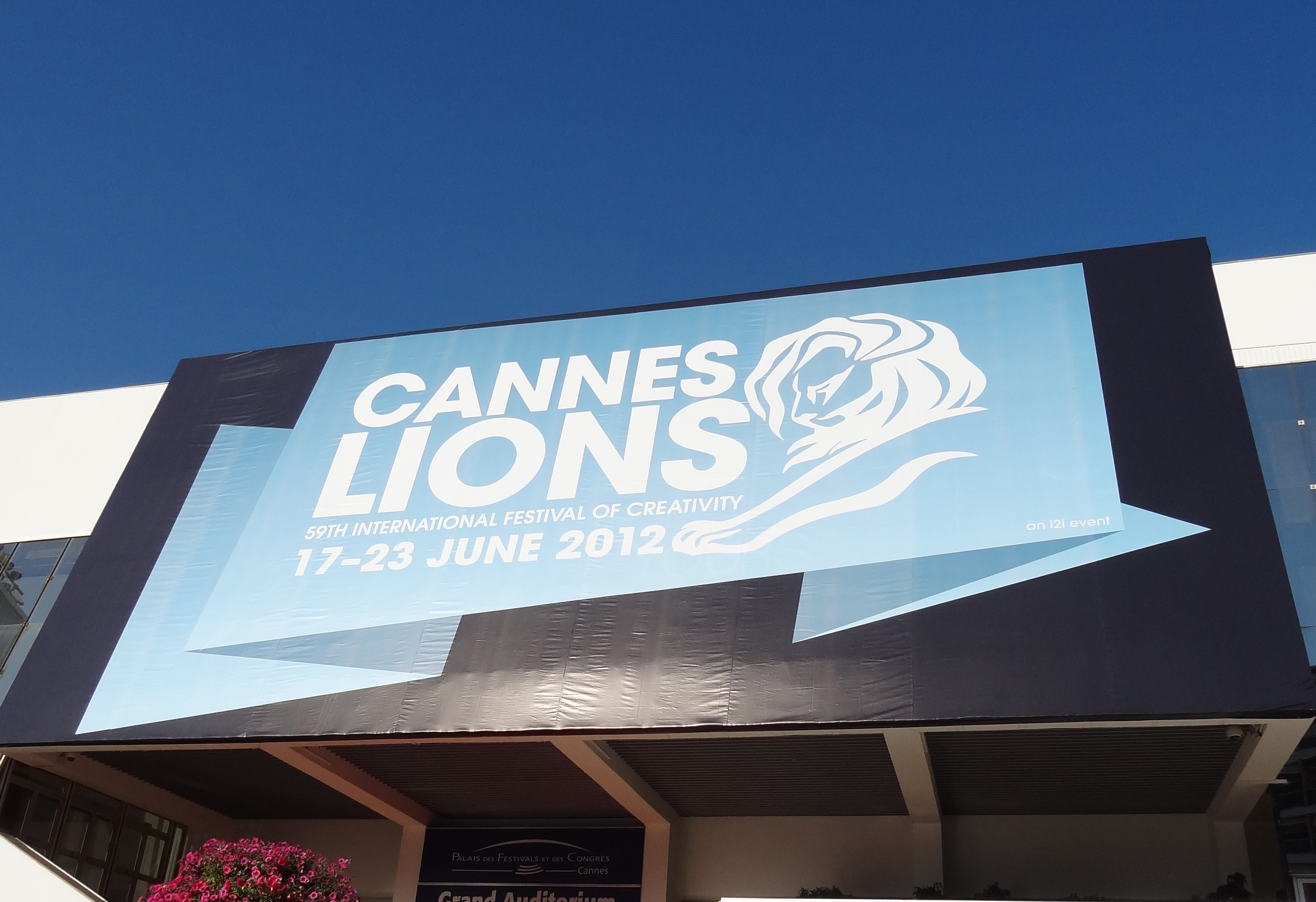
With all the best creative works in the world, hundreds of hours of seminars, forums, workshops, screenings, not to mention the chance to catch up with creatives from all cultures (and scanning QR codes on each other’s name tag), Cannes Lions remain the definitive global event that the whole industry converge, debate and celebrate. ‘Rethinking’, ‘redefining’ are the usual buzzwords at Cannes. It’s a time to take stock of what we do and what it means to us, to our clients and to the industry as a whole.

Here are a few personal favourites, takeaways and observations.

Diverse talents

Every year, the winning works in Cannes often lead to healthy debates and discussions. This year, the most talked about winning works were from some of the most diverse talents.

Ogilvy Shanghai’s entry entitled ‘#CokaHands’ that won the agency a Grand Prix in the outdoor category was designed by Jonathan Mak, a 20-year-old Hong Kong designer. Some people questioned what the agency’s involvement in the creation of the work and whether ‘co-creation’ deserved to win in Cannes. The truth is, creative ideas can now come from absolutely anywhere. The role of creative directors is increasingly becoming a ‘curator’ of talents or a ‘conductor’ of ideas from various disciplines. The power of an idea sometimes depends on the content created by the crowd. It wouldn’t surprise me that in the future there will be an award dedicated to the public.

Connected thinking

In the past few years, digital had been the hot topic. This year, it’s all about ‘content’. The Festival afterall, had been renamed as the ‘Festival of Creativity’ for many years and it now covers creativity across all disciplines. This year the Festival had added new categories including ‘Branded Content and Entertainment Lions’ and ‘Mobile Lions’. For ‘Branded Content’, it was defined as “the creation of, or natural integration into, original content by a brand”. The new categories reflect the diverse formats of the creative content being created, making sure the Festival remain relevant to the evolution of the industry.

The conventional ‘art director + copywriter’ creative team structure is also becoming obsolete. In order to create truly innovative solution for clients it’s more common for creatives to be teamed up or partnered with technology strategists, or in some cases, producers in the entertainment business.

I feel strongly that the new breed of creative talents will all have the natural capability of ‘connected thinking’, and integrated approach will be at the heart of everything we do. Just look at the Grand Prix winner in the ‘Ambient’ category entitled ‘The Invisible Drive’ promoting the Mercedes-Benz F-CELL hydrogen-powered car. The outcome was that the big idea connected with consumers as wide as social media, PR and mobile channels. Ambient or mobile is no longer the ‘peripheral’ media but in some cases they become the key to integrate other touch points.

Another remarkable example of truly cross-disciplinary thinking was Nike+’s Fuelband, which Stefab Olander said in his presentation, that the products and services had become the marketing. Bob Greenberg of R/GA described Nike is a ‘functionally integrated’ company that offer ‘seamless, interconnected services and experiences, not just products’. This way of thinking will become the DNA of future brand architecture, and naturally influences how we as creatives tackle the challenge.

Democratisation of content

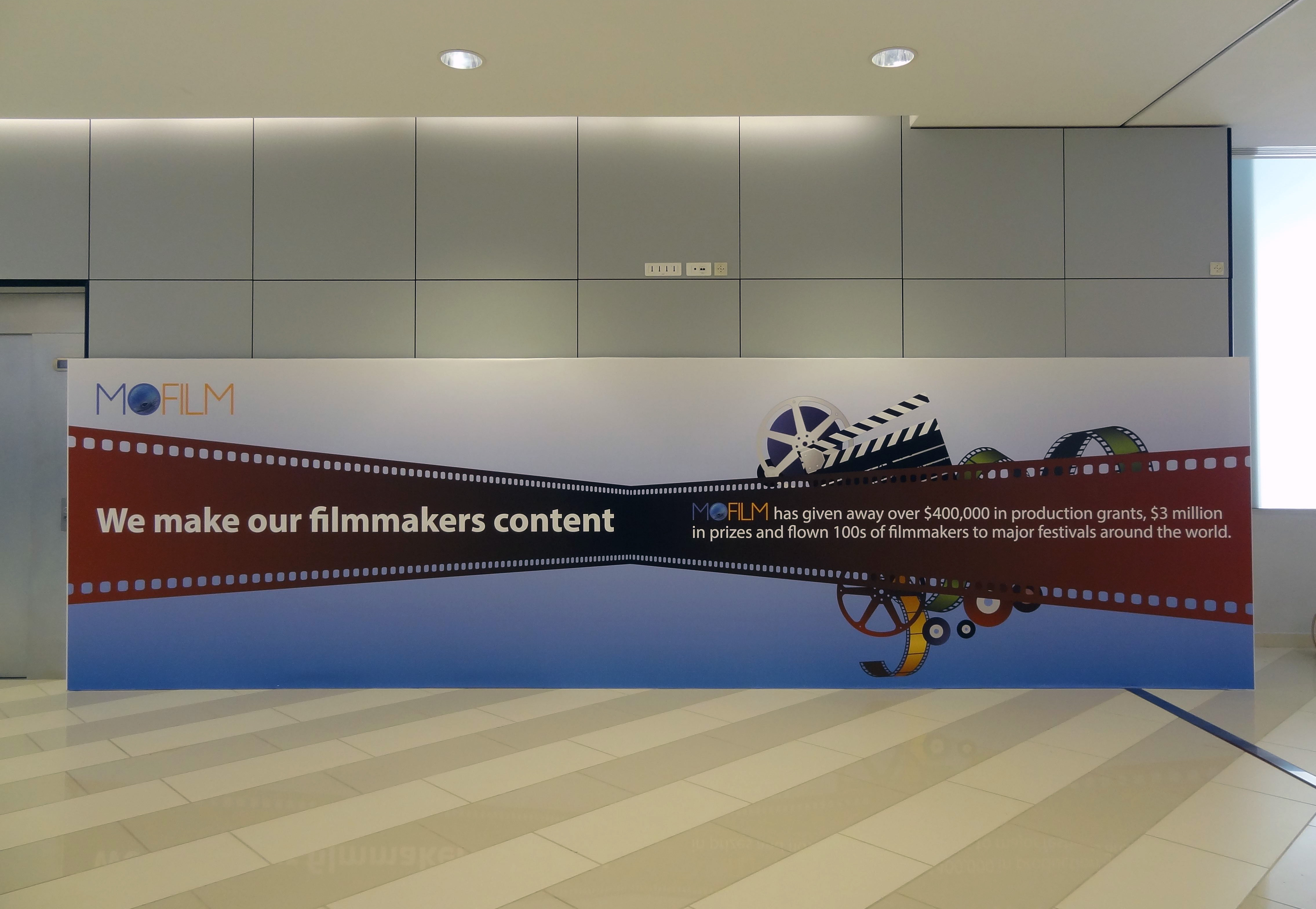
A couple of years ago, when MOFILM started to challenge the industry by introducing a new content-based democracy, inviting film production talents from all over the world to crack the creative brief and produce content for big brands, a lot of us were sceptical about the practice. Was it just a trend? Was it created out of brand’s desire to shop around for ideas and driving down production costs? Today, it all seems to make perfect sense. Not only has it met the demanding nature of the explosion of multi-screen channels, it actually turned out to be a totally viable model to unite production talents from creative agency, film and the music industry. Clients also become more involved and actively participating in the creative process. But I think the most exciting development is in nurturing new talents. The ‘Welcome to the industry’ initiative from MOFILM, has already starting to break down the barriers within an industry historically being dominated by a few big giant production houses.

Clients believe in magic

In one of the Cannes stories showcased in Cannes, Sir Martin Sorrell said ‘creativity is what makes clients’ precious marketing budget goes further’. Cannes has always served an instrumental value of promoting the passion of creativity not just among creative teams but also among clients. It’s an opportunity for clients to witness why creating and producing good work matters to us, and how we could work together to build trust and empathy towards meeting each other’s objectives.

In the seminar ‘Can your Client Be Your Friend?’ Joel Ewanick of GM and Jeff Goodby demonstrated what’s the perfect client agency relationship is. When your client starts a conversation and you complete the sentence, that’s good partnership. An agency is not a ‘service provider’ but someone to help connecting the dots.

Local creativity shines

The international representation of the delegates has boosted the importance of local creativity. Local creative talents had been given the opportunity to showcase the unique creative approach that often creatives from other culture do not understand. Brazil had set up their design focused showcase, China Advertising Association promoted the creative culture through mobile technology, production house from Russia and digital group from Thailand all tried to take advantage of the opportunity to reach out to international creatives. Mexico had even erected their ‘pop-up’ venue just across the street from the Palais with the aim to welcome clients and creative talents who like to know more about the market.

Among all the seminars, Korea made a point about their ‘cultural assets’ with the recent success of K-Pop phenomenon, and Japan took to the stage and shared with us the success story behind the global icon of Hello Kitty being localised for different markets. Julian Boulding from the Networkone continued to showcase work of independent creative agencies from China to Spain and Sweden, the presentation not only was about sharing the great work coming from independent agencies, but also the unique approaches that reflect their local culture. My favourite, however, was the local pride demonstrated by R. Balki, Chairman and CCO of Lowe Lintas India and Shekhar Kapur, Oscar nominated director. Balki firmly believed that the desire of India is to remain India, and when he said ‘Where there is a difference, there is a creative interest’ he addressed the issue of global advertising head on. I salute to that.

Creativity for good

There has been much talk in recent times about how the advertising industry should use our wealth of creativity to help change people’s behavior for the benefit of the world. That message was amplified when former President Bill Clinton gave a heart-felt and compelling talk in Cannes. Not only did his insight and global context made the case impressively, the topic was also timely and very much in line with the current trend of ‘building brands for good’. He also pinpointed our role as creatives is to spread the information and get it right. He said “A lot of the facts that will form the trends of the future are not apparent to people. The communicators will have a profound influence on how the next 20-30 years will turn out…People need honest communication. You can do that.”

Indeed, some of the freshest ideas that won in this year’s Festival were rooted from a desire to create something meaningful and useful for people. Examples like the Chipotle’s ‘Back to the Start’ film combined with the brand’s Cultivate Foundation. The ‘Unhate’ print work from Benetton connects the brand with social responsibility.

The cream of the crop I think clearly goes to the ‘Help Memories Bandages campaign’ created by Droga5. The campaign had turned marrow registration as a part of an everyday act by putting a marrow registry kit into a box of Help Remedies bandages.

A standing ovation

In an industry that brings in fresh new talents every year, it’s important that we pay respect to the gurus who had shaped the idea of great advertising over the years. This year Google’s ‘Re: Brief’ project had done exactly that. The project aimed to challenge whether the most iconic advertising campaigns can be ‘re-imagined’ for a modern audience. We had the chance to meet Paula Green, the original copywriter who authored the Avis slogan ‘We Try Harder’ and Harvey Gabor, the art director who helped to make the Coca-Cola ‘Hilltop’ TVC a global success. Google’s objective of this campaign was to prove that digital channels could extend any big ideas in innovative ways. For us, witnessing the collaboration between the legendary creatives and the bright young things was simply a joy. By applying fresh thinking, innovative creative ideas sometimes could be born out of genius adaptation. No wonder at the end of the seminar, the adland legends received a standing ovation from the audience.

Before it all becomes distant memories, what are your best bits of this year’s Cannes Festival? I like to hear from you.

I will also expand some of these themes in future blogs and apply insights from a local perspective, please join in the discussions.

Apart from a few obvious global giants, few brands establish dominant positions in multiple markets. Often this has become one of the main challenges for brands to create one single global creative platform.

There are a number of reasons behind it. Different perception and taste of the product is one, what I call the ‘marmite effect’. Or the product could simply be reaching a totally different product life cycle in each local market. Orangina is one such example.

When Miss O meets Tora-san

In France, the brand began its production in 1963 and has been so established that, arguably, it has become a lifestyle brand. In its popular advertising featuring the classic Orangina Rouge to the controversial ‘furry animals’ campaign back in 2008 through to the most recent ‘Miss O’ creative platform, it’s all about creating buzz and keeping the brand fresh and current in the mind of consumers. It’s what’s outside that counts!

In the new series of spots by Fred & Farid Paris directed by Joseph Kahn, the lady wolf is portrayed as a heartbreaker, in “Working late” she lies to her wimpy boyfriend and then in “Dump”, she breaks up with him in a very public way. The work, centred around the wolf, who is Miss O, asks you who really is the boss when it comes to relationships.

The local culture also provides a perfect playground for such creative platform to flourish, share and engage. The tagline “C’est qui le sexe fort?” (creatively adapted as “Who is the boss” or literally means “Which is the strong sex?”). Interestingly, the French consumers with GSOH are not steered to take the message literally, and the creative idea was instantly recognised, accepted and embraced.

On the other side of the globe in Japan, Suntory acquired the Orangina brand in 2009 and the new-look Orangina replacing the classic pear-shaped bottle was just launched in March. As a relatively new brand in the market, being French has its advantage. The recent ‘Toro-san’ campaign featuring Richard Gere rides on that ‘foreignness’ and was distinctively designed for that market.

In the launch commercial, Richard Gere appears as Tora-san, the lovable ‘loser’ in Shochiku’s very popular 48-film series of Japanese comedy movies entitled 『男はつらいよ』(It’s Tough Being a Man). Not only is he a contemporary adaptation of the original character played by Kiyoshi Atsumi, the commercials also use the same iconic music “Otoko wa Tsuraiyo” from the series.

The original Tora-san in 『男はつらいよ』:

The underlying message is that the brand is a western idea adapting within the framework of the Japanese culture. By riding on the character of Tora-san who is famous for being a bumbling Mr. Everyman, gives the brand personality a distinctive western dimension.

George Field wrote in his book “From Bonsai to Levis” (1983), and commented that in Japan culture, contrary to the stereotype, the woman is the boss (in the context that Japanese women control the purse strings in the family and are well positioned to occupy the seat of power).

There is an intriguing irony between the dominating ‘Miss O’ and humble ‘Tora-san’ here. Though I have a feeling that it is just a happy co-incidence, I cannot help but imagine what if ‘Tora-san’ meets ‘Miss O’, could that be a marriage made in heaven?

Could that be a cross-border joint production and creative adaptation?

One might argue that going for a completely localised approach, it means that it will be a long way when Orangina can create a truly global brand that captures a common language as in the case of some other globally aligned beverage brands.

For the time being, the brand may not be able to take advantage of the costs efficiency enjoyed by creating a centralized global idea that many marketers aim for, but they certainly give the brand an opportunity to grow with the local market at the right time, in the right place. This also reinforces the belief that there is no single, optimal answer to the question of how to manage a global brand.

A few thoughts on adapting global marketing campaign had been brewing in my mind for a while.

It all started with the ‘T’ word

In the past 10 to 15 years, when brands started to go truly global, one of the key steps they had taken was to align their brand advertising to achieve synergy in every market they advertised. At the same time, they started to realise that translating the marketing message in foreign markets was no longer enough, that’s when ‘transcreation’ (in global campaign) came about.

That was the time when I was recruited by a London agency specialised in this revolutionary approach. I moved from Asia and joined the original visionary team that determined to make it happen. I started to leverage my creative agency background to build a network of creative writers around the world, expanding the company’s talent pool from just key European markets to pan European, Asia Pacific and beyond.

Nowadays, the creatives that I have handpicked, have collaborated with global brands across the whole industry and had become the early adopters of this discipline.

At that time I didn’t really refer the service as ‘transcreation’. I defined the approach the same way as any local copywriter creating brand stories for the local market – the only difference being the global idea formed the backbone of any creation.

In many ways, my philosophy has never changed.

What does ‘transcreation’ really mean?

It reached the point when more and more people talked about ‘transcreation’, and marketing agencies (even translation companies) started to reposition their services to match the growing trend, the true essence of the meaning had become blurred.

In previous blog posts I have already expressed my view on the many misguided definition of ‘transcreation’.

Many people over the years had attempted to define it, with little clarity.

In the world of global marketing, the term has been loosely adopted to describe the kind of adaptation work that adjusts to the culture of local markets.

Within the marketing implementation industry, the term had been used just because this is, up till now, how most marketers understand it.

In fact, I have always had a concern about how people actually understand it.

It gets a bit ‘cloudy’, and does not help in showing the true value of the work when it is being done properly.

If you think all it involves are avoiding all the cultural pitfalls in foreign markets – expressions that does not mean anything in a foreign market, colors that create negative connotation or customs that is frowned upon in a different culture, then think again.

Let’s take a step back and consider the brief origin of this term:

Transcreation was originally used to express a literary tradition of India especially after the emergence of modern Indian languages. It was used to describe the people oriented and the time oriented creative translations of the ancient Sanskrit spiritual texts. This term originally used by contemporary writers like P. Lal for his English translation of the Shakuntala and Brhadaranyaka Upanishad (1974), is applicable for the whole tradition of creative translation of great classics like Ramayana, Bhagarata and Mahabharata in the regional languages from Sanskrit.

The methodology of ‘transcreation’ all makes perfect sense until companies start using it as a fancy term without fundamentally understanding the true impact of the output.

Part of the arguments in the past on ‘transcreation’ was on cost savings – one ‘master asset’ to be used for multiple markets. This argument is also gradually breaking down with the introduction of smart production process and technique, and the costs of recreating asset could be substantially reduced.

And that’s the reason why I like to challenge it and rethink what’s relevant in the current global marketing landscape.

Is ‘transcreation’ the only answer?

I developed the ‘creative adaptation’ service for some of our clients just because of this. By approaching it pretty much the same way as in approaching a brief from fresh, but taking the global brand and platform as part of the backbone of the local execution. By thinking 360° and activate the ideas in all touchpoints relevant to each local market.

The only challenge is, the line is so fine that only when you involve in the creative process, you often find it difficult to distinguish the differences.

I believe it is also intensified by the growing popularity and importance of digital and social media, where local executions are often the more preferred way to execute the idea. Locally developed executions are beginning to challenge the integrity of the global platform.

I think it’s time we approach it from a fresh angle.

Enter Trans-origination

Rather than approaching it in the contrived and often tightly framed manner – i.e. based on a master source and ‘transcreate’ it by applying necessary adjustments and changes to make it suit the local market – we approach it the same way like the thinking process of ‘origination’.

Origination: The act of starting something for the first time; introducing something new.

Only when we stop just trying to ‘shadow’ the master source materials, will we be able to think out of the box like a local.

Part of the arguments in the past on ‘transcreation’ was on cost savings – one ‘master asset’ to be used for multiple markets. This argument is also gradually breaking down with the introduction of smart production process and technique, and the costs of recreating asset could be substantially reduced.

How to be a ‘trans-originator’

How should we approach ‘trans-origination’? Here are some tips:

  • Don’t get boxed in the literal context. Spend more time to identify the true universal truth and more importantly, what each market actually needs. The universal truth is more likely to be deeper than the copy message itself or just the ‘campaign tagline’
  • Understand the local market beyond just the confinement of the ad campaign in question. Consider every expression holistically – from naming through to corporate culture, from marketing communications to even model of after sales service – because these are increasingly important in creating total consumer experience.
  • Apply T-shaped thinking: if transcreation goes for the depth, trans-origination goes for the breath. Think about extending the campaign to media apart from the pre-determined channel of the ‘master asset materials’ – sometimes spending the resources to re-interpret it in a totally different media that works better for the local market will prove to be more effective and guaranteed better return of investment.

In a nutshell, don’t just do it, start asking why.

Some signs of the growing trend of ‘trans-origination’

  • Coca-cola’s ‘Open Happiness’ positioning was trans-originated as a social campaign in Philippines, a good-will ‘Make Tomorrow Better’ campaign in Egypt or as a fun-filled marketing stunt in America – all are designed to be the manifestation of the ‘happiness’ platform in a local context
  • Johnnie Walker ‘Keep Walking’ platform is trans-originated in the ‘Jonnie Walker House’ experience in China
  • Levis was trans-originated as a local brand dENiZEN primarily for China and will be marketed across Asia, transferring knowledge of the mother brand to a newly developed local brand
  • French fashion label Hermès trans-originated as a luxury brand Shang Xia for China in 2010
  • InterContinental hotel is going to trans-originated a new luxury hotel brand in China riding on the operation support of the master-brand but in a totally local brand identity

Less theory. More practice.

All the ‘T’ words that I have mentioned are not attempting to replace each other. They should be considered as different tools in a tool box – use the right one in the right time.

Trans-origination is not just a fancy term or an upgrade of the same service but a fundamental shift of thinking and approach in developing and adapting global marketing campaigns in the digital age.

For this reason, I think trans-origination™, is the future.

I like to hear your thoughts.

(No need to Google the term yet, cause you read it here first!)

Stop press: Just when I am writing this on my holiday I read that Starbucks will open its first coffee shops in India in August or September in 2012, and aims to have 50 outlets by year-end through a tie-up with the Tata group. With India’s strong tea drinking culture, I can see a perfect case for trans-origination in the brewing.

When the Coca Cola team presented the ‘Liquid and linked’ marketing communications platform at theCannesseminar this year, I could see that there were more than just a few nods among the audience.

Not only is the Coca Cola one of the most respected and iconic global brand, they are also someone who had throughout the years been able to maintain a truly cohesive brand culture. With the ‘Liquid and linked’ marketing communications, they have actually summarised beautifully one of the common themes atCannesthis year; and have in their own way, rebranded the most talked about definition of integrated marketing.

The digital media had been one of the hot topics in the past few years at Cannes. However, arguably it is only this year when everyone from clients and the creative folks have truly embraced the value and effectiveness of digital media. For creatives like us, we also see this as new playground to create compelling and engaging connections with people.

The challenge in making the most of this new model of marketing communications is how all these interconnected activities and initiatives can be effectively and strategically linked and organised; and instead of purely mist of brilliant small ideas, they should be connected and help to create the most powerful and long lasting brand, that people will remember and ultimately, building long term brand equity.

I foresee there are a few emerging trends:

Ideas need to be organised:

In the ‘Liquid and linked’ working model, there are multiple content created by multiple partners. In the traditional model where it was 30 sec centric, the TVC often takes the lead in shaping and leading the dialogue (if there were a real dialogue at all in the old days). Whereas in the truly integrated model, any kind of media can be at the very centre of the interaction. I think the way Droga5 described their winning entry for Microsoft illustrated the complexity of a truly integrated campaign:

“…The target does not differentiate online from offline, so we built the program across existing media formats and channels but in a new way that wove them together and added interactive to everything. The target audience is wary of marketing messaging and needed to use Bing technology to change any perception of it or increase overall usage. Our campaign worked across media channels in a new way and put the technology at the heart of the marketing…”

When the campaign structure is no longer a simple hierarchy, planning takes on a whole new level of challenge. The need to organise big idea and liberate everybody to do really fantastic thing in each channel is crucial. We also need to make sure all parties involved in the process can benefit from each other’s knowledge and expertise.

This can be achieved through a combination of technology (building the basic logic to the system, enabling knowledge transfer and asset sharing) but more importantly, it needs a truly visionary leadership who can mastermind a unique roadmap of the brand story.

Co-creation and collaboration is more important than ever:

Co-creation and creative collaboration is something I have been advocating for many years having worked with a network of creative talents in different countries. But now with the benefit of technology and the open-mindedness of clients, it has become a truly powerful way of working. And indeed, this means the traditional agency structure is being threatened and that’s why this year atCannes, agency roster is a huge debate and full-service agency is almost becoming outdated. Research indicated that today, global clients usually review their lead creative agency every two years. The key to keep your client is constantly being able to reinvent yourself and able to partner with a wide spectrum of creative talents. Change is the new constant has never been so true.

However, co-creation and collaboration should not be confused with crowdsourcing of creative content. I think we seem to have blurred the definition to an extent that I feel slightly uncomfortable with. Dave Alberts from Mofilm put it nicely as ‘curated crowdsourcing’ – instead of simply aggregating raw creative content from an open source, they encourage creatives to focus on a shared brand objectives and build storytelling around it.

Crowdsourcing without strategic thinking on the brand has the danger of creating communications that is simply generic to the category, and not something that builds on the brand history, vision and future direction.

New approaches in linking global content and local content:

As we increasingly strive for content that is ‘so contagious that cannot be controlled’ (in the words of the Cola Cola’s model), the traditional way of localising global campaign need to be reconsidered. Not only there is no one size fits all solution, it’s increasingly important to be able to create local content that ‘linked’ to the global platform rather than simply a versioning exercise. The new trend is global coordination and local customisation; and when we talk about customisation, we are also talking about transforming content from one media to another locally, using the most powerful way of communications in each local market.

To global brands: what kind of ‘liquid and linked’ marketing communications is suitable for you? Do you give space for your creative talents to try out new ideas that are contagiously brilliant? Are your agencies able to create content that are well-connected and ‘linked’ in the increasing complex media landscape?

To creatives: Are you still thinking in the old fashioned 30 sec centric way or are you able to approach in a media neutral manner? How connected are you with other creative talents working on different media of the campaign?

Here you can see a video archive of Coca-Cola Content 2020 presentation by Jonathan Mildenhall: