
Language, once considered a domain of human interaction and expression, is now a critical operational layer that permeates branding, marketing, product development, knowledge management, customer service, and even internal collaboration. The advent of large language models (LLMs) has amplified this shift, enabling brands to leverage language as a dynamic tool for efficiency, innovation, and connection.

The start of 2025 brings in new goals and expectations across different aspects of language operations. With rapid advancements in technology, particularly in generative AI, we’re witnessing a fundamental shift in the way global content is created, adapted, and localised. Over the past year, I’ve been energized by these developments, not merely because of their efficiency or cost-saving potential but because they challenge us to rethink the creative and operational frameworks that underpin global branding and communication.

A Moment of Reflection: Lessons from Transcreation’s Rise

Reflecting on the early days of transcreation, I’m reminded of the transformative conversations that reshaped how global brands approached global content adaptation. At that time, the idea of producing local versions of global campaigns in a centralized hub was both refreshing and disruptive. It spurred a cascade of innovations in team structures, asset management, and centralized production workflows. Allowing global brands to appoint independent creative agencies without a network, and at the same time creative hotshops have the capabilities to win and retain global clients from one single office. These discussions – focused on balancing quality with efficiency – laid the groundwork for the centralized and scalable systems many brands rely on today.

Now, with the rapid development of generative AI, I sense a similar moment of transformation -one that holds even greater potential to redefine the disciplines of language and content creation.

Here’s why:

Generative AI: A Catalyst for Change in Global Content Creation

Generative AI offers capabilities that challenge traditional silos in global branding and language operations. The technology is not just a tool for automation but a platform for reimagining collaboration, creativity, and cultural relevance. Key areas where I envision generative AI driving innovation include:

1. Decentralized and Collaborative Ideation

Generative AI allows for global creative platforms to be ideated, conceived, and refined in any market, language, or culture—and in real time. This is a profound shift from the historically English-centric approach to global campaigns.

Collaboration tools enhanced by AI also facilitate smoother communication across departments and geographies, breaking down silos and fostering innovation, enabling creatives from diverse markets to articulate big ideas and anticipate challenges in adaptation. By empowering talent in any region to lead, we’re moving toward truly “global-ready” creative platforms where ideas can flow bidirectionally—whether originating from Tokyo, China, São Paulo, or Nairobi.

2. Blurring the Lines Between Translation, Transcreation, and Localisation

Generative AI’s ability to produce culturally nuanced and fluent language outputs is blurring the distinctions between these disciplines. What I’ve long referred to as “creative adaptations” is finally becoming a unified process. Foundation models, powered by brand-specific data, are already producing more coherent outputs across creative and technical content.

Key developments include:

  • Integrating brand terminology at the system level, ensuring consistency across all languages and content types.
  • Implementing supervisory agents within agentic workflows to maintain alignment with a brand’s tone, voice, and cultural context.
  • Grounding outputs in proprietary knowledge, creating more seamless integration across creative and technical writers and teams.

The result? Greater coherence and cultural sensitivity across all touchpoints.

3. Foundation Models as Living Brand Guardians

Traditionally, brand guidelines have been static documents—invaluable but cumbersome. Generative AI enables the creation of dynamic, living brand style guides, grounded in “brand truth” and continuously refined with proprietary data. These AI-driven guidelines act as virtual partners, providing:

  • Real-time feedback on language and multimodal content creation.
  • Dynamic adaptability to changing market contexts or evolving brand narratives.
  • Enhanced consistency in tone, design, and cultural relevance across platforms.

This approach transforms static guidelines into an evolving resource that grows alongside the brand.

4. The Rise of Branded Conversational Interfaces

As generative AI evolves, brands are becoming increasingly conversational in their tone of voice. The next generation of customer-facing chatbots will be “branded customer agents,” and will be considered as brand ambassadors in their own right, serving as the primary touchpoint in customer journeys. Unlike traditional chatbots (and “chatbots” won’t be the right term to justify their significant role), these agents will:

  • Reflect the brand’s personality and tone of voice, shaping perceptions in real time.
  • Replace traditional corporate website hierarchies, allowing users to access information or services via natural language queries.
  • Create seamless, human-like interactions that enhance customer experience and deepen brand loyalty.

This shift will redefine the role of brand websites, transforming them from static repositories into dynamic, conversational platforms that adapt to each user’s needs.

Looking Ahead: Opportunities and Challenges

While the promise of generative AI is vast, it’s essential to approach these advancements with a balance of optimism and critical thought. AI is a double-edged sword in our industry – it empowers us to push boundaries, stretch production possibilities, and localize content at scale, yet it also raises critical challenges around intellectual property, ethical use, and fair remuneration.

Yet, as we’ve seen in past industry evolutions, the challenges are often the catalysts for innovation. The integration of generative AI into language operations is an opportunity to reimagine not just how we create and adapt content but how we connect with audiences across cultures, languages, and platforms.

As we step into 2025, I’m excited to see how these trends unfold and to be part of the conversations shaping the future of language in branding. 

Let’s chat. 
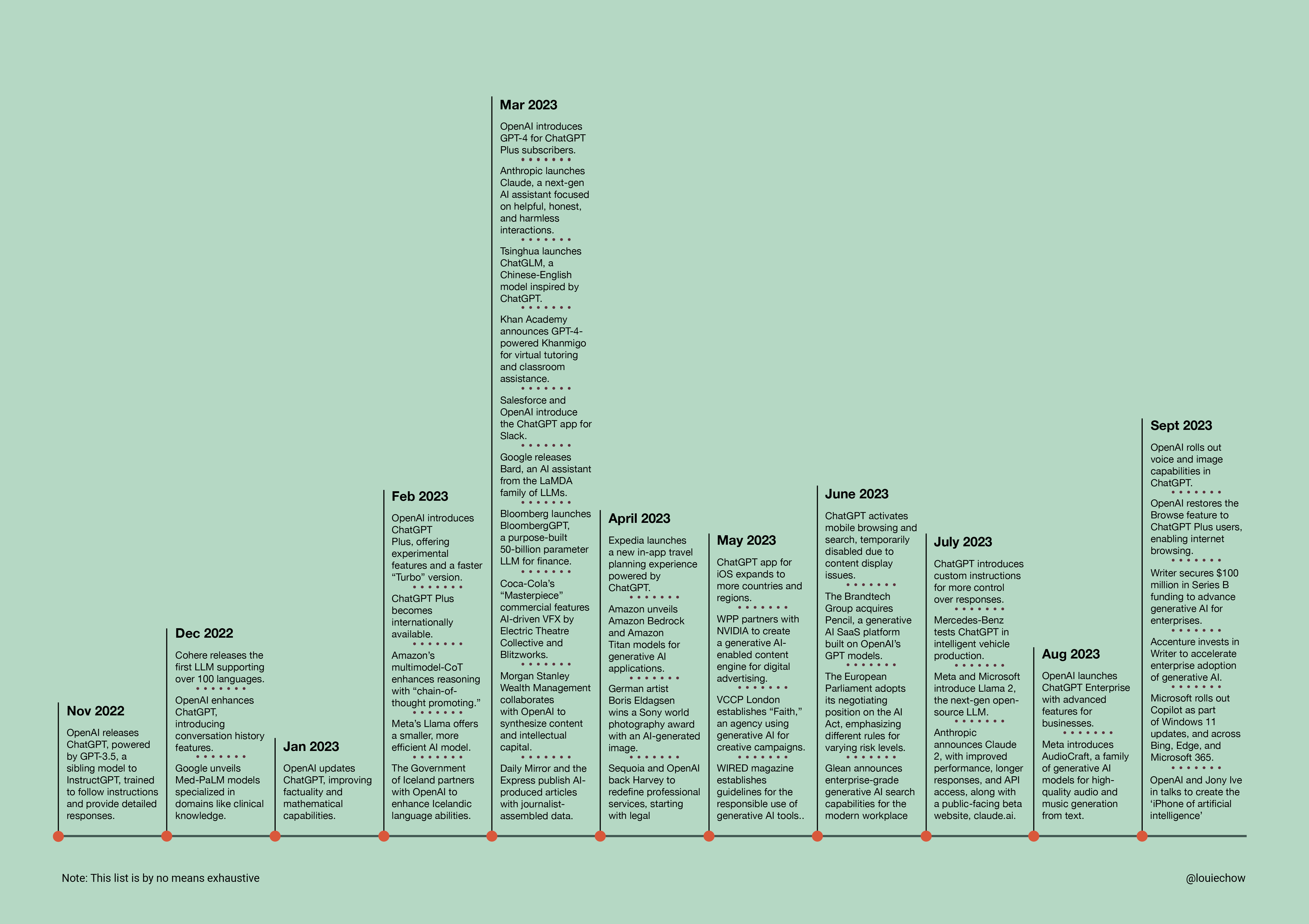
Over the past year, Generative AI has blossomed into one of the most transformative technologies of our era. Its development has been nothing short of astonishing, sparking our collective imagination and prompting industries to reconsider their approaches. From the outset, it became evident that this technology wasn’t just a passing trend; it was a paradigm shift.

Generative AI, as a versatile general-purpose technology, has showcased its remarkable adaptability. Its applications span an impressive array of sectors, offering innovative solutions to age-old challenges. From healthcare to education, agriculture to retail, Generative AI has explored every nook and cranny, promising transformative possibilities in each domain.

Consumer adoption of Generative AI has been nothing short of spectacular. Within months of its introduction, we bore witness to the birth of the fastest-growing consumer application in history, reshaping how individuals engage with technology. Simultaneously, at an enterprise level, companies swiftly recognized the potential of Generative AI. Start-ups emerged, matured, and were promptly acquired, illustrating the intense competition in this burgeoning field.

My conversations with creatives and CEOs have painted a vivid picture of the divergent emotions surrounding Generative AI. Creatives have wholeheartedly embraced the new possibilities it offers, envisioning a future where AI collaborates in the creative process. In contrast, CEOs in global production agencies experience both excitement and caution, grappling with the transformative potential of Generative AI within their established structures.

Participating in an executive program on AI offered a unique vantage point to witness Generative AI’s impact across diverse industries. From healthcare to legal, education to agriculture, each sector approaches adoption and implementation with its own unique perspective and challenges. This diversity underscores the technology’s universality while emphasizing the need for tailored strategies.

AI Spring’s Key Moments (…So Far)

To reflect on pivotal moments in the Generative AI journey, I’ve compiled key events from the past 11 months or so. While these moments aren’t exhaustive and aren’t ranked in any particular order, they shed light on how various companies and industries, closely related to my own field, have harnessed the power of Generative AI to drive innovation, transform processes, and gain a competitive edge.

Here are the highlights (and some of the busiest months):

March – April: As the rapid development of Generative AI reached its zenith, companies across various sectors demonstrated a wide array of reactions. Tech giants like OpenAI and Meta continued to lead the charge with the introduction of GPT-4 and Llama 2, catering to both consumer and enterprise demands. Meanwhile, the Government of Iceland embraced this technology as a means to enhance the Icelandic language abilities, exemplifying how even governments are recognizing its potential. Coca-Cola launched new commercial entitled “Masterpiece”. The VFX team at Electric Theatre Collective and creative agency Blitzworks used a mix of live action shots, digital effects and AI to create the commercial and its complex transitions. In the corporate world, Morgan Stanley Wealth Management announced a strategic initiative to leverage Generative AI to synthesize content, underlining its increasing importance in the financial sector. Media outlets like the Daily Mirror and the Express ventured into AI-produced content, further blurring the lines between human and AI-generated journalism. Start-ups like Anthropic and Tsinghua joined the AI race, unveiling chatbots and models aimed at fostering helpful, honest, and efficient interactions. In education, Khan Academy‘s adoption of GPT-4 for Khanmigo emphasized AI’s role in revolutionizing learning. Expedia announced an exciting new use for artificial intelligence with the beta launch of a new in-app travel planning experience powered by ChatGPT. Finally, Bloomberg‘s launch of BloombergGPT in finance highlighted how industries are building purpose-built models to cater to their unique needs. These diverse reactions demonstrate how Generative AI’s impact transcends boundaries, with companies both big and small, across various sectors, recognizing its transformative potential.

May: The rapid development of Generative AI spurred creative and advertising agencies like WPP and VCCP into action. WPP, the global advertising conglomerate, partnered with NVIDIA to harness Generative AI’s capabilities for digital advertising. This strategic move showcased how the industry was eager to leverage AI to create innovative and highly personalized ad campaigns. Meanwhile, VCCP London took a bold step by launching “Faith,” an agency dedicated to using Generative AI for creative campaigns. This agency’s emergence signaled a pivotal shift in the creative landscape, demonstrating a readiness to explore the untapped potential of AI in generating compelling and unique content. These initiatives in May underscored how the advertising and creative sectors were proactively embracing Generative AI as a means to reimagine their creative processes and stay at the forefront of innovation in a rapidly evolving industry.

June: The acquisition of Pencil by the Brandtech Group marked a strategic response to the rapid development of Generative AI. Pencil, a generative AI SaaS platform built on OpenAI’s GPT models, offered a valuable tool for generating channel-ready ads and copy. The Brandtech Group’s acquisition showcased a clear recognition of the technology’s potential to revolutionize content creation and advertising, aligning with their objectives to enhance brand strategies through AI-driven creative solutions.

September: Accenture‘s investment in Writer demonstrated a deep commitment to accelerating the enterprise adoption of Generative AI. Writer‘s full-stack generative AI platform seems to have attracted attention from companies looking for a quality and secure environment. Accenture’s investment also signalled the importance of harnessing Generative AI for enterprise-level applications, from content generation to data synthesis, as a means to drive efficiency and innovation across various industries.

The industry’s response to ChatGPT’s launch has been nothing short of remarkable. Every development in the technology has been met with a closely-knit succession of events, demonstrating how companies are eager to keep pace with AI advancements.

As we delve into these insights, it becomes evident that Generative AI’s unstoppable progress is shaping the future of technology and business in profound ways.

Generative AI’s Next Act: Focus on Business Value

The swift adoption and incorporation of Generative AI models into various aspects of our lives demonstrate that this technology is not a distant dream; it’s a reality that’s here to stay. From content creation to virtual assistants, AI is drastically changing how we work, interact, and consume information. It has the potential to reshape industries and improve productivity across the board. In fact, Generative AI is now positioned on the “Peak of Inflated Expectations” on the Gartner “Hype Cycle for Emerging Technologies, 2023”, which is marked by rapid growth, widespread adoption, and a focus on speed as a strategic advantage.

The technology has already begun transforming industries and promises to continue doing so, fundamentally altering the way we live and work. This era of AI is unstoppable, and those who embrace it with agility and innovation will likely reap the greatest rewards.

Generative AI’s initial year was characterized by the discovery and deployment of foundation models, sparking a frenzy of novel applications that showcased the technology’s capabilities. These early apps were primarily technology-driven, offering lightweight demonstrations of Generative AI’s potential. However, as “Spring” is beginning to mature, the focus is shifting from technology-out to customer-back. In this phase, Generative AI is poised to address real human problems comprehensively. We will see applications take a different approach, integrating foundation models as a component of more holistic solutions.

We are also entering a phase where we will have a keen focus on the value we get from Generative AI — exactly how it will render business processes more effective and generate new services. We will start to understand that not everything possible is useful; and not everything useful delivers true value to the business. I will explore more on these developments in our next conversation.