video wall_1

The increasing popularity of using pictures and video to share on social media is driving a huge trend for using moving images to tell the brand story.

Speaking at an event in June this year, Facebook’s Nicola Mendelsohn endorsed this trend and said she would put money on Facebook “becoming all video over the next five years.”

No wonder clients want videos – lots of them.

Consider these stats:

  • Facebook grew to 8 billion average daily video views from 500 million users in Q3 2015. The jump from just 4 billion video views per day in Q2 the same year was massive.
  • More than a third of Snapchat’s daily users create their own “Stories”, broadcasting photos and videos as chronological narratives, and users are watching 10 billion videos a day on the application, up from 8 billion in February this year.
  • The time people now spend watching video on Instagram has increased by more than 40 percent in the last 6 months.

And that’s just a glimpse into the burgeoning popularity of video content.

Interestingly, we’re not just watching more video, we are becoming more discerning about it too.

We expect videos to offer a more immersive experience – for example, the 360-degree videos that let us move around and explore a certain space, and interact with responsive elements. The 360-degree video from Expedia, created by 180LA in partnership with Tourism Australia, lets viewers lead their own exploration of the dramatic land- and sea-scapes of Australia. Since making its debut on YouTube in June, it has already gathered more than 3 million views.

Tourism Australia makes the best use of immersive videos

We also have a totally different perception of “quality” for videos. Instagram used to be less aesthetically forgiving than Vine, but I think the line is going to be blurred.

Then comes personalization. Amazon has just started dynamic video ads as a pilot, using browsing data to decide what creative to show prospective shoppers on the fly and tailoring itto individual users’ interests.

The media, more than ever before, is becoming the message. And it is constantly evolving. Even the greatest creative will fail if it is not delivered via the latest and most relevant visual format.

The Video Revolution

There are countless forms of video content. At one end of the spectrum, you have the most practical eLearning or product videos delivering informative / educational content, while at the other you might have highly engaging, entertaining and stylized content that tells a brand story. Then there’s everything in between. All forms of video content serve a very different purpose and certainly take a very different type of talent to create and produce.

In addition, every channel demands a different format and creative approach in reaching a high level of engagement. And as every brand is likely to adopt a multi-channel strategy, we are going to see more and more services dedicated to curation. Brands will need to have a central hub overseeing the creation of videos across all touch points and bring them all together.  After all, in the eyes of the consumers, the different types of video content should all be channelling the same brand.

So, what type of video content is suitable for your brand? What are the latest trends? Let’s take a look at some of my recent observations.

Long Form vs. Short Form

The common belief is that short videos, with text overlays instead of sound, are becoming more popular. They grab attention quickly and, when designed appropriately, they can produce an instant emotional response.

However, that doesn’t mean long videos won’t work. It’s all down to the creative idea. Brands now understand that if the content is engaging and rewarding to view, consumers will be willing to seek out the longer form.

Gautam Anand from YouTube APAC recently remarked on the trend for longer video ads in the region. The most popular ads from 2015 averaged more than four minutes. Four of the top ten YouTube videos were more than 5 minutes in duration. The single most viewed ad, from Malaysia Airlines for the Chinese New Year celebration, is a majestic 12 minutes long!

Sound vs. Silence

Voice-overs, when produced cheaply and unprofessionally, can wreck even the smartest and most beautiful content. Worse than being ineffective, they can actually damage the brand. In this case, silence is definitely golden.

Another reason why videos for social channels are increasingly being created without sound is that, in many cases, people are in locations where they can’t consume the audio. Savvy brands ensure their idea resonates even with people who haven’t turned their speakers on.

“Tiny Magic” Videos from Lostmyname can be fully enjoyed with no sound

As video consumers become more discerning, the bar for quality video is raised higher every day. Even the humble screen text is enjoying a renaissance. It’s not just about adding functional subtitles or uninspiring supertitles any more. Visualizations and overlays are getting more sophisticated all the time, raising consumer expectations, and therefore requiring us to plan ahead, to include them as part of the storytelling rather than an afterthought.

Local vs. Global

Can video content really go global? Just because you can (technologically speaking), it doesn’t mean to say you should.

If we know how crucial it is to draw emotional responses from consumers, we know that we have to reach them not just locally, but somehow personally. Does anyone really still believe this can be achieved with one version of one video that has not been even adapted or localized?

Inevitably, global brands do have finite resources, so it can be hard to create different content for every platform. Not to mention tailor-make it for each market with its different language and culture.

The key is to think global from day one – to take a brand’s core assets from the beginning and consider how the local audience will consume them.  This will allow you to think about how to tailor your content for different platforms, and how certain assets can be shared for global releases.

Localization of video content has come a long way from the days when subtitling or dubbing were the marks of a successful international brand. As an example of just how far, take Coca Cola, who recently launched Coke TV in the UK and Ireland. Instead of globally developed TV ad campaigns featuring global celebrities, the channel is aiming to target young local audiences via YouTube. Fronted by two YouTubers, Dodie and Manny, each episode will be based around the themes of gaming, sport and music. The appeal is obviously very local (or at most regional). It will be interesting to see if Coke TV rolls this tactic out globally.

CokeTV GB

CokeTV France

One thing is certain – for video content to go global, pre-production and planning are essential. Great videos, like any other content, demand the time-honored ingredients of success: a deep understanding of the consumer, superlative storytelling, and inspirational creative work. If you can combine that to deliver stories to people in each market in a new, exciting, and locally relevant way, then you will have won them – and quite possibly won the world.
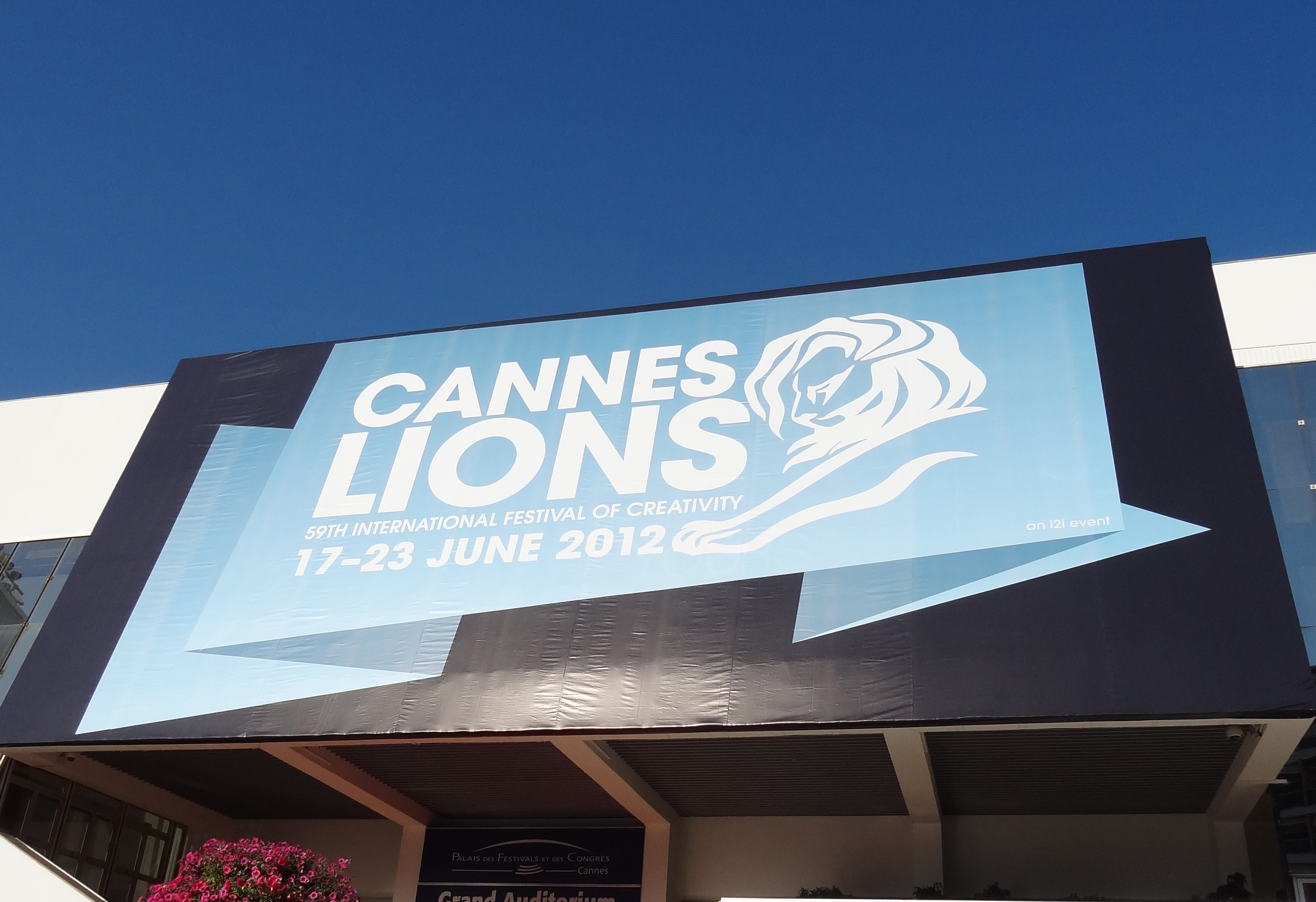
With all the best creative works in the world, hundreds of hours of seminars, forums, workshops, screenings, not to mention the chance to catch up with creatives from all cultures (and scanning QR codes on each other’s name tag), Cannes Lions remain the definitive global event that the whole industry converge, debate and celebrate. ‘Rethinking’, ‘redefining’ are the usual buzzwords at Cannes. It’s a time to take stock of what we do and what it means to us, to our clients and to the industry as a whole.

Here are a few personal favourites, takeaways and observations.

Diverse talents

Every year, the winning works in Cannes often lead to healthy debates and discussions. This year, the most talked about winning works were from some of the most diverse talents.

Ogilvy Shanghai’s entry entitled ‘#CokaHands’ that won the agency a Grand Prix in the outdoor category was designed by Jonathan Mak, a 20-year-old Hong Kong designer. Some people questioned what the agency’s involvement in the creation of the work and whether ‘co-creation’ deserved to win in Cannes. The truth is, creative ideas can now come from absolutely anywhere. The role of creative directors is increasingly becoming a ‘curator’ of talents or a ‘conductor’ of ideas from various disciplines. The power of an idea sometimes depends on the content created by the crowd. It wouldn’t surprise me that in the future there will be an award dedicated to the public.

Connected thinking

In the past few years, digital had been the hot topic. This year, it’s all about ‘content’. The Festival afterall, had been renamed as the ‘Festival of Creativity’ for many years and it now covers creativity across all disciplines. This year the Festival had added new categories including ‘Branded Content and Entertainment Lions’ and ‘Mobile Lions’. For ‘Branded Content’, it was defined as “the creation of, or natural integration into, original content by a brand”. The new categories reflect the diverse formats of the creative content being created, making sure the Festival remain relevant to the evolution of the industry.

The conventional ‘art director + copywriter’ creative team structure is also becoming obsolete. In order to create truly innovative solution for clients it’s more common for creatives to be teamed up or partnered with technology strategists, or in some cases, producers in the entertainment business.

I feel strongly that the new breed of creative talents will all have the natural capability of ‘connected thinking’, and integrated approach will be at the heart of everything we do. Just look at the Grand Prix winner in the ‘Ambient’ category entitled ‘The Invisible Drive’ promoting the Mercedes-Benz F-CELL hydrogen-powered car. The outcome was that the big idea connected with consumers as wide as social media, PR and mobile channels. Ambient or mobile is no longer the ‘peripheral’ media but in some cases they become the key to integrate other touch points.

Another remarkable example of truly cross-disciplinary thinking was Nike+’s Fuelband, which Stefab Olander said in his presentation, that the products and services had become the marketing. Bob Greenberg of R/GA described Nike is a ‘functionally integrated’ company that offer ‘seamless, interconnected services and experiences, not just products’. This way of thinking will become the DNA of future brand architecture, and naturally influences how we as creatives tackle the challenge.

Democratisation of content

A couple of years ago, when MOFILM started to challenge the industry by introducing a new content-based democracy, inviting film production talents from all over the world to crack the creative brief and produce content for big brands, a lot of us were sceptical about the practice. Was it just a trend? Was it created out of brand’s desire to shop around for ideas and driving down production costs? Today, it all seems to make perfect sense. Not only has it met the demanding nature of the explosion of multi-screen channels, it actually turned out to be a totally viable model to unite production talents from creative agency, film and the music industry. Clients also become more involved and actively participating in the creative process. But I think the most exciting development is in nurturing new talents. The ‘Welcome to the industry’ initiative from MOFILM, has already starting to break down the barriers within an industry historically being dominated by a few big giant production houses.

Clients believe in magic

In one of the Cannes stories showcased in Cannes, Sir Martin Sorrell said ‘creativity is what makes clients’ precious marketing budget goes further’. Cannes has always served an instrumental value of promoting the passion of creativity not just among creative teams but also among clients. It’s an opportunity for clients to witness why creating and producing good work matters to us, and how we could work together to build trust and empathy towards meeting each other’s objectives.

In the seminar ‘Can your Client Be Your Friend?’ Joel Ewanick of GM and Jeff Goodby demonstrated what’s the perfect client agency relationship is. When your client starts a conversation and you complete the sentence, that’s good partnership. An agency is not a ‘service provider’ but someone to help connecting the dots.

Local creativity shines

The international representation of the delegates has boosted the importance of local creativity. Local creative talents had been given the opportunity to showcase the unique creative approach that often creatives from other culture do not understand. Brazil had set up their design focused showcase, China Advertising Association promoted the creative culture through mobile technology, production house from Russia and digital group from Thailand all tried to take advantage of the opportunity to reach out to international creatives. Mexico had even erected their ‘pop-up’ venue just across the street from the Palais with the aim to welcome clients and creative talents who like to know more about the market.

Among all the seminars, Korea made a point about their ‘cultural assets’ with the recent success of K-Pop phenomenon, and Japan took to the stage and shared with us the success story behind the global icon of Hello Kitty being localised for different markets. Julian Boulding from the Networkone continued to showcase work of independent creative agencies from China to Spain and Sweden, the presentation not only was about sharing the great work coming from independent agencies, but also the unique approaches that reflect their local culture. My favourite, however, was the local pride demonstrated by R. Balki, Chairman and CCO of Lowe Lintas India and Shekhar Kapur, Oscar nominated director. Balki firmly believed that the desire of India is to remain India, and when he said ‘Where there is a difference, there is a creative interest’ he addressed the issue of global advertising head on. I salute to that.

Creativity for good

There has been much talk in recent times about how the advertising industry should use our wealth of creativity to help change people’s behavior for the benefit of the world. That message was amplified when former President Bill Clinton gave a heart-felt and compelling talk in Cannes. Not only did his insight and global context made the case impressively, the topic was also timely and very much in line with the current trend of ‘building brands for good’. He also pinpointed our role as creatives is to spread the information and get it right. He said “A lot of the facts that will form the trends of the future are not apparent to people. The communicators will have a profound influence on how the next 20-30 years will turn out…People need honest communication. You can do that.”

Indeed, some of the freshest ideas that won in this year’s Festival were rooted from a desire to create something meaningful and useful for people. Examples like the Chipotle’s ‘Back to the Start’ film combined with the brand’s Cultivate Foundation. The ‘Unhate’ print work from Benetton connects the brand with social responsibility.

The cream of the crop I think clearly goes to the ‘Help Memories Bandages campaign’ created by Droga5. The campaign had turned marrow registration as a part of an everyday act by putting a marrow registry kit into a box of Help Remedies bandages.

A standing ovation

In an industry that brings in fresh new talents every year, it’s important that we pay respect to the gurus who had shaped the idea of great advertising over the years. This year Google’s ‘Re: Brief’ project had done exactly that. The project aimed to challenge whether the most iconic advertising campaigns can be ‘re-imagined’ for a modern audience. We had the chance to meet Paula Green, the original copywriter who authored the Avis slogan ‘We Try Harder’ and Harvey Gabor, the art director who helped to make the Coca-Cola ‘Hilltop’ TVC a global success. Google’s objective of this campaign was to prove that digital channels could extend any big ideas in innovative ways. For us, witnessing the collaboration between the legendary creatives and the bright young things was simply a joy. By applying fresh thinking, innovative creative ideas sometimes could be born out of genius adaptation. No wonder at the end of the seminar, the adland legends received a standing ovation from the audience.

Before it all becomes distant memories, what are your best bits of this year’s Cannes Festival? I like to hear from you.

I will also expand some of these themes in future blogs and apply insights from a local perspective, please join in the discussions.

A few thoughts on adapting global marketing campaign had been brewing in my mind for a while.

It all started with the ‘T’ word

In the past 10 to 15 years, when brands started to go truly global, one of the key steps they had taken was to align their brand advertising to achieve synergy in every market they advertised. At the same time, they started to realise that translating the marketing message in foreign markets was no longer enough, that’s when ‘transcreation’ (in global campaign) came about.

That was the time when I was recruited by a London agency specialised in this revolutionary approach. I moved from Asia and joined the original visionary team that determined to make it happen. I started to leverage my creative agency background to build a network of creative writers around the world, expanding the company’s talent pool from just key European markets to pan European, Asia Pacific and beyond.

Nowadays, the creatives that I have handpicked, have collaborated with global brands across the whole industry and had become the early adopters of this discipline.

At that time I didn’t really refer the service as ‘transcreation’. I defined the approach the same way as any local copywriter creating brand stories for the local market – the only difference being the global idea formed the backbone of any creation.

In many ways, my philosophy has never changed.

What does ‘transcreation’ really mean?

It reached the point when more and more people talked about ‘transcreation’, and marketing agencies (even translation companies) started to reposition their services to match the growing trend, the true essence of the meaning had become blurred.

In previous blog posts I have already expressed my view on the many misguided definition of ‘transcreation’.

Many people over the years had attempted to define it, with little clarity.

In the world of global marketing, the term has been loosely adopted to describe the kind of adaptation work that adjusts to the culture of local markets.

Within the marketing implementation industry, the term had been used just because this is, up till now, how most marketers understand it.

In fact, I have always had a concern about how people actually understand it.

It gets a bit ‘cloudy’, and does not help in showing the true value of the work when it is being done properly.

If you think all it involves are avoiding all the cultural pitfalls in foreign markets – expressions that does not mean anything in a foreign market, colors that create negative connotation or customs that is frowned upon in a different culture, then think again.

Let’s take a step back and consider the brief origin of this term:

Transcreation was originally used to express a literary tradition of India especially after the emergence of modern Indian languages. It was used to describe the people oriented and the time oriented creative translations of the ancient Sanskrit spiritual texts. This term originally used by contemporary writers like P. Lal for his English translation of the Shakuntala and Brhadaranyaka Upanishad (1974), is applicable for the whole tradition of creative translation of great classics like Ramayana, Bhagarata and Mahabharata in the regional languages from Sanskrit.

The methodology of ‘transcreation’ all makes perfect sense until companies start using it as a fancy term without fundamentally understanding the true impact of the output.

Part of the arguments in the past on ‘transcreation’ was on cost savings – one ‘master asset’ to be used for multiple markets. This argument is also gradually breaking down with the introduction of smart production process and technique, and the costs of recreating asset could be substantially reduced.

And that’s the reason why I like to challenge it and rethink what’s relevant in the current global marketing landscape.

Is ‘transcreation’ the only answer?

I developed the ‘creative adaptation’ service for some of our clients just because of this. By approaching it pretty much the same way as in approaching a brief from fresh, but taking the global brand and platform as part of the backbone of the local execution. By thinking 360° and activate the ideas in all touchpoints relevant to each local market.

The only challenge is, the line is so fine that only when you involve in the creative process, you often find it difficult to distinguish the differences.

I believe it is also intensified by the growing popularity and importance of digital and social media, where local executions are often the more preferred way to execute the idea. Locally developed executions are beginning to challenge the integrity of the global platform.

I think it’s time we approach it from a fresh angle.

Enter Trans-origination

Rather than approaching it in the contrived and often tightly framed manner – i.e. based on a master source and ‘transcreate’ it by applying necessary adjustments and changes to make it suit the local market – we approach it the same way like the thinking process of ‘origination’.

Origination: The act of starting something for the first time; introducing something new.

Only when we stop just trying to ‘shadow’ the master source materials, will we be able to think out of the box like a local.

Part of the arguments in the past on ‘transcreation’ was on cost savings – one ‘master asset’ to be used for multiple markets. This argument is also gradually breaking down with the introduction of smart production process and technique, and the costs of recreating asset could be substantially reduced.

How to be a ‘trans-originator’

How should we approach ‘trans-origination’? Here are some tips:

  • Don’t get boxed in the literal context. Spend more time to identify the true universal truth and more importantly, what each market actually needs. The universal truth is more likely to be deeper than the copy message itself or just the ‘campaign tagline’
  • Understand the local market beyond just the confinement of the ad campaign in question. Consider every expression holistically – from naming through to corporate culture, from marketing communications to even model of after sales service – because these are increasingly important in creating total consumer experience.
  • Apply T-shaped thinking: if transcreation goes for the depth, trans-origination goes for the breath. Think about extending the campaign to media apart from the pre-determined channel of the ‘master asset materials’ – sometimes spending the resources to re-interpret it in a totally different media that works better for the local market will prove to be more effective and guaranteed better return of investment.

In a nutshell, don’t just do it, start asking why.

Some signs of the growing trend of ‘trans-origination’

  • Coca-cola’s ‘Open Happiness’ positioning was trans-originated as a social campaign in Philippines, a good-will ‘Make Tomorrow Better’ campaign in Egypt or as a fun-filled marketing stunt in America – all are designed to be the manifestation of the ‘happiness’ platform in a local context
  • Johnnie Walker ‘Keep Walking’ platform is trans-originated in the ‘Jonnie Walker House’ experience in China
  • Levis was trans-originated as a local brand dENiZEN primarily for China and will be marketed across Asia, transferring knowledge of the mother brand to a newly developed local brand
  • French fashion label Hermès trans-originated as a luxury brand Shang Xia for China in 2010
  • InterContinental hotel is going to trans-originated a new luxury hotel brand in China riding on the operation support of the master-brand but in a totally local brand identity

Less theory. More practice.

All the ‘T’ words that I have mentioned are not attempting to replace each other. They should be considered as different tools in a tool box – use the right one in the right time.

Trans-origination is not just a fancy term or an upgrade of the same service but a fundamental shift of thinking and approach in developing and adapting global marketing campaigns in the digital age.

For this reason, I think trans-origination™, is the future.

I like to hear your thoughts.

(No need to Google the term yet, cause you read it here first!)

Stop press: Just when I am writing this on my holiday I read that Starbucks will open its first coffee shops in India in August or September in 2012, and aims to have 50 outlets by year-end through a tie-up with the Tata group. With India’s strong tea drinking culture, I can see a perfect case for trans-origination in the brewing.

It has become official that social media has a “meaning”, and it has imbedded very much into our everyday lives.

On 25 August, Merriam-Webster’s Collegiate Dictionary has announced that it will add “tweet” and  “social media”, in addition to more than 150 other new words.

According to the Dictionary, Tweet (listed as both a noun and verb) is defined as:

1. a chirp note.

2. a post made on the Twitter online message service.

The definition of “social media”, which the dictionary lists as being used for the first time in 2004, reads:

Forms of electronic communication (as Web sites for social networking and microblogging) through which users create online communities to share information, ideas, personal messages, and other content (as videos).

However, this is of course just the beginning, and by large, only a western definition. Although at Merriam-Webster, they now feel that the meaning of the word had ‘stabilized’ enough to include them in the dictionary, we are at a time when we are still not quite sure about what tweeting means to our lives. And just like any cultural phenomenon, its meaning, its usage, its adoption rate by the public and its public image are all different in different culture.

As a communication tool, different culture also has a slightly different point of view and hence perception towards what’s acceptable.

In the Middle East, the dramatic events of the Arab Spring and the recent scandal that brought down Congressman Anthony Weiner, tweet is a word that has been part of the story. And had certainly gained international recognition. Tweeting is becoming a widely acceptable form of personal expression. At a seminar during this year’s Cannes Advertising Festival in June, Ama Salama, the Egyptian filmmaker who took part in the Egyptian protests said: “Some corporations are using the same brainwashing techniques that those government used to sell their bureaucracy and propaganda, social media is going to get them because we shall tweet about it and write about it. That s the power of the people.”

In the UK, after the London riot, Prime Minister David Cameron told MPs that the Government was trying to establish how to stop the internet being a tool for troublemakers to organize disruption. Social media, all of a sudden, had been blamed for being a disruptive tool. Although it has been reported that the government already appears to be rowing back on Cameron’s initial suggestion, it did cast a shadow in the medium which should actually can be a very useful intelligence assets.

Eric Schmidt, Google’s executive chairman, remain positive about this. In the lecture he had given at the Edinburgh International Television Festival on 26 August 2011, when asked about his opinion on Cameron’s proposal, he said: “I think it’s a mistake. It is a mistake to look into the mirror and try to break the mirror. Whatever the problem was [that caused the riots] the internet is a reflection of that problem. If you have a problem, use the internet to understand what the problem is.”

Meanwhile in Germany, Facebook was being challenged in August to disable its new photo-tagging software. The German government said that they were concerned that Facebook’s facial recognition feature amounted to the unauthorized collection of data on individuals. Johannes Caspar, the data protection supervisor in Hamburg, who has been aggressive in investigating the online practices of companies like Google and Apple, also warned that the feature could violate European privacy laws. The case is still under review.

In China, “tweet” remains only the meaning of a tweety bird, and the platform, together with other imported social media platforms like facebook, are still being blocked. Artist Ai Wei Wei started blogging in 2006 (he was among the few ‘celebrity bloggers’ who were actually invited by sina.com.cn to promote their new platform), by 2009, the blog was started to be censored and its entire contents deleted from cyberspace. However, if you think that the tight control on social media is limiting its growth as a medium is wrong. In fact it had been reported that social media is more popular in China than UK. China also has a thriving ecosystem based around dozens of networks with home-grown platforms such as QZone, Baidu and 51.

One tweet different reactions – it’s important to know what social media actually means in your culture; no matter whether you are tweeting to express your personal views or as the face of a commercial brand.

In the coming blogs I will be exploring in more depths some of the following topics:

  • How different are the use of social media in different markets?
  • What are the proper “social behavior” in social media, what are widely considered as good manners in tweeting and blogging?
  • If you are tweeting and blogging on behalf of your company, are there any useful guidelines?
  • If you are maintaining a twitter profile for a brand as a marketing tool, what are the most effective approach to remain authentic while meeting the commercial objectives?

I welcome to hear your viewpoints and inputs especially from different cultures. (@louiechow)

Links and reference:

Merriam-Webster’s Collegiate® Dictionary Updated for 2011: http://www.prnewswire.com/news-releases/something-to-tweet-about-128379408.html

Ai Wei Wei’s Blog: writings, interviews, and digital rants, 2006-2009/ Ai Wei Wei: edited and translated by Lee Ambrozy. Massachusetts Institute of Technology Press 2011.

Google’s Schmidt sees more partners for Google TV (Georgina Prodhan, uk.reuters.com, 27.08.2011)

Germany Investigating Facebook Tagging Feature (Kevin J. O’Brien, nytimes.com, 03.08.2011)