It’s 9 pm and I have just finished skyping some of my creatives in Russia to double-check on a heated debate happening in the world of global marketing. I wanted to be absolutely sure before I add to the rather controversial discussion.

On 21 March, Kraft announced that its new global snacks company will be named Mondelēz International. (Please note there is a crucial macron over the second ‘ē’ – which a lot of journalists did not include, in fact, neither does it appear in the body copy of the press release from the official Kraft Food corporate site.)

The company said the name (pronounced mohn-dah-LEEZ) was inspired by the suggestions of two Kraft employees. It is intended to evoke the idea of a “delicious world” as “monde” is derived from the Latin word for “world” and “delez” as an expression of “delicious”.

Jez Frampton, global chief executive officer of Interbrand Ltd., talked about Kraft Foods Inc.’s name change to Mondelēz on Bloomberg Television, referring to the move as a clever idea.

Here’s where the debated started. After the announcement, it was quickly reported that when pronounced as “mohn-dah-LEEZ” the name immediately drew feedbacks from Russians. Apparently, it means something else to Russian speakers, say those fluent in Russian slang (when pronounced, it sounds like the Russian slang for a sex act). After  checking with a few Russian copywriters and they all confirmed that people will certainly make fun of it; they also believe that the male audiences will likely be the ones to be starting the joke.

Back in August last year, Kraft already announced officially that the company would be splitting in two by the end of 2012. And like any creation of a new name, it had gone through a long process. According to Kraft, they have crowdsourced ideas from employees, and more than 1,000 participated, submitting more than 1,700 potential names. The inspiration for Mondelēz came from two employees, one in Europe and another in North America. From what it sounds, it was probably the result of a blend of two ideas.

Kraft also commented that they have properly vetted the new name. According to John Simley, they have done “extensive due diligence in testing the name…that included two rounds of focus groups in 28 languages, including Russian. We determined misinterpretations in any of the languages to be low-risk.”

Many people blamed it on the language issues, and indeed quite a few blunders like this had happened in the world of international marketing and branding. I recall here just a few examples:

  • When Volvo first came to America, the brand also drew controversy because of the similarity between the Swedish car manufacturer’s name and female anatomy
  • General Motors had to change the name of its Buick LaCrosse sedan in Canada after it found that the word LaCrosse is slang for masturbation in Quebec
  • On Bugati‘s website in December 2010, they have advertised a car available in “rape yellow” which was the result of French to English translation error of “rapeseed plant”

Naturally, we question why the problem was not spotted within a big multinational company with multi-cultural staff? What about the creative or brand agency who had provided consultancy service to the client? What about the research company who orchestrated the focus groups in 28 languages? Did they do the research locally?

I believe the reasons are sometimes more complex.

Even if they have conducted naming research, my speculation is that due to the confidential nature of the research, they may not have revealed the full context of the name, so the respondents only were able to respond to a very tightly defined definition, or the questions were set in such ambiguous way that people could not give the feedbacks judged from the whole background.

Another possibility is the reasons behind the name change often could be complex and all the stakeholders contributed in the decision process, which often ends up in a ‘mish-mash’ of messages. A small twist to a name often will end up a disaster. Not every name change could be as lucky as and managed to conquer the challenges like Accenture (formerly Andersen Consulting) or Altria Group Inc. (formerly Philip Morris).

Let’s just take a look at some of the recent name changes and their rationales behind it, and you’ll know what I meant.

Abbott Laboratories spinoff will be named AbbVie

“The beginning of the name connects the new company to Abbott and its heritage of pioneering science. The ‘vie’ calls attention to the vital work the company will continue to advance to improve the lives of people around the world.” According to Richard Gonzalez, CEO of the drugs business.

Sara Lee Corp.’s beverage spinoff will be dubbed D.E. Master Blenders 1753

“When determining the new name, we thought of things like strong heritage, leadership, dynamic brands, bold growth, operational excellence and a great place to work…D.E Master Blenders 1753 captures all of those elements.” According to Michiel Herkemij, executive vice president and chief executive officer, Sara Lee International Beverage.

Corn Products Inc. will rename as Ingredion

“As the current name would suggest, Corn Products make a number of food ingredients from processed corn, like starches and sweeteners. But the company also makes ingredients from tapioca roots, like starches that add texture to dairy products” According to spokesman Aaron Hoffman. And according to the CEO Ilene Gordon it will reflect a shift in business strategy, but it would better represent the company’s pallet of products.

Relaying on a name to encapsulate a huge ambition may well be one of the main reasons.

Whether the name Mondelēz will be under further scrutiny is unsure and whether the company will evaluate all the feedbacks from the public is yet to be seen. At the time of writing this, we understand that Kraft is also working with the creative firm Attik on a corporate identity for Mondelēz, let’s hope some magic could be done to rectify this situation.

I would like to hear your thoughts.
Mother’s Day is celebrated on different days and dates around the world. But in almost every culture, mothers play an important role in the family. Brands understand that, and will take every good opportunity to win over their hearts.

In the Chinese culture, women often are the ultimate decision maker in anything related to the household. Here’s a brilliant analyses of this insight from Tom Doctoroff:

Despite Mao’s famous saying that women hold up half the sky, even “liberated” female consider their role inside the home paramount. In the West, working mothers struggle with balancing career and family satisfaction. In China, the battle is much less fierce; the kid wins, hands down…So, to bond with your female “head of the household” target, tell her she is really really needed. Without her, there would be no family harmony.

In America, mothers don’t really want to see the “perfect mom” in advertising. They consider that the image of perfection is frustrating to watch, rather than aspirational. Kate Reddy, played by Sarah Jessica Parker, in the movie I Don’t Know How She Does It only exists in fairy-tales. On the other hand, if brands portray the “real mom” image, it is too close to home – a reminder of the frustrations, rather than a positive view. However, one thing they have in common – they all want to see a positive image that shows the brand delivering a realistic improvement in their life.

In the Thai culture, where people in urban families rarely show their love to each other publicly, a commercial by DATC (see below) made it even more inspiring, and in a way, started a ‘movement’ in the local market.

From food, financial services, retail, communication products to public service; and from China, Thailand, Singapore, Brazil to the UK, this emotion works unfailingly. When executed well and honestly, the effect could be very powerful.

At the time when we celebrate Mother’s Day, I would like to share with you some of the commercials from different countries that capture this sentiment.

I also love to hear from you if there are any great campaigns describing the love of mothers that reflect the unique culture of your country.

John Lewis, United Kingdom

LamSoon, Hong Kong

DTAC, Thailand

Thai Life Insurance (Mae Toi), Thailand

TE AMO (I LOVE YOU), Brazil

thinkfamily.sg, Singapore

Note: This public service spot was directed by the award winning film director, Yasmin Ahmad.

▼Bud Light “Wedding Dress”

▼Oxo Cubes: Remember Preston

▼Calbee Cappa Chips: That’s Life

Heinz Baked Beans: Margaret

Tesco: Cheerful Sole

*Special thanks to Helena Rosario from Portugal and Nattavut Leekulpitak from Thailand who sent me their favourite commercials.

Happy Mother’s Day. Wherever you are.

A few thoughts on adapting global marketing campaign had been brewing in my mind for a while.

It all started with the ‘T’ word

In the past 10 to 15 years, when brands started to go truly global, one of the key steps they had taken was to align their brand advertising to achieve synergy in every market they advertised. At the same time, they started to realise that translating the marketing message in foreign markets was no longer enough, that’s when ‘transcreation’ (in global campaign) came about.

That was the time when I was recruited by a London agency specialised in this revolutionary approach. I moved from Asia and joined the original visionary team that determined to make it happen. I started to leverage my creative agency background to build a network of creative writers around the world, expanding the company’s talent pool from just key European markets to pan European, Asia Pacific and beyond.

Nowadays, the creatives that I have handpicked, have collaborated with global brands across the whole industry and had become the early adopters of this discipline.

At that time I didn’t really refer the service as ‘transcreation’. I defined the approach the same way as any local copywriter creating brand stories for the local market – the only difference being the global idea formed the backbone of any creation.

In many ways, my philosophy has never changed.

What does ‘transcreation’ really mean?

It reached the point when more and more people talked about ‘transcreation’, and marketing agencies (even translation companies) started to reposition their services to match the growing trend, the true essence of the meaning had become blurred.

In previous blog posts I have already expressed my view on the many misguided definition of ‘transcreation’.

Many people over the years had attempted to define it, with little clarity.

In the world of global marketing, the term has been loosely adopted to describe the kind of adaptation work that adjusts to the culture of local markets.

Within the marketing implementation industry, the term had been used just because this is, up till now, how most marketers understand it.

In fact, I have always had a concern about how people actually understand it.

It gets a bit ‘cloudy’, and does not help in showing the true value of the work when it is being done properly.

If you think all it involves are avoiding all the cultural pitfalls in foreign markets – expressions that does not mean anything in a foreign market, colors that create negative connotation or customs that is frowned upon in a different culture, then think again.

Let’s take a step back and consider the brief origin of this term:

Transcreation was originally used to express a literary tradition of India especially after the emergence of modern Indian languages. It was used to describe the people oriented and the time oriented creative translations of the ancient Sanskrit spiritual texts. This term originally used by contemporary writers like P. Lal for his English translation of the Shakuntala and Brhadaranyaka Upanishad (1974), is applicable for the whole tradition of creative translation of great classics like Ramayana, Bhagarata and Mahabharata in the regional languages from Sanskrit.

The methodology of ‘transcreation’ all makes perfect sense until companies start using it as a fancy term without fundamentally understanding the true impact of the output.

Part of the arguments in the past on ‘transcreation’ was on cost savings – one ‘master asset’ to be used for multiple markets. This argument is also gradually breaking down with the introduction of smart production process and technique, and the costs of recreating asset could be substantially reduced.

And that’s the reason why I like to challenge it and rethink what’s relevant in the current global marketing landscape.

Is ‘transcreation’ the only answer?

I developed the ‘creative adaptation’ service for some of our clients just because of this. By approaching it pretty much the same way as in approaching a brief from fresh, but taking the global brand and platform as part of the backbone of the local execution. By thinking 360° and activate the ideas in all touchpoints relevant to each local market.

The only challenge is, the line is so fine that only when you involve in the creative process, you often find it difficult to distinguish the differences.

I believe it is also intensified by the growing popularity and importance of digital and social media, where local executions are often the more preferred way to execute the idea. Locally developed executions are beginning to challenge the integrity of the global platform.

I think it’s time we approach it from a fresh angle.

Enter Trans-origination

Rather than approaching it in the contrived and often tightly framed manner – i.e. based on a master source and ‘transcreate’ it by applying necessary adjustments and changes to make it suit the local market – we approach it the same way like the thinking process of ‘origination’.

Origination: The act of starting something for the first time; introducing something new.

Only when we stop just trying to ‘shadow’ the master source materials, will we be able to think out of the box like a local.

Part of the arguments in the past on ‘transcreation’ was on cost savings – one ‘master asset’ to be used for multiple markets. This argument is also gradually breaking down with the introduction of smart production process and technique, and the costs of recreating asset could be substantially reduced.

How to be a ‘trans-originator’

How should we approach ‘trans-origination’? Here are some tips:

  • Don’t get boxed in the literal context. Spend more time to identify the true universal truth and more importantly, what each market actually needs. The universal truth is more likely to be deeper than the copy message itself or just the ‘campaign tagline’
  • Understand the local market beyond just the confinement of the ad campaign in question. Consider every expression holistically – from naming through to corporate culture, from marketing communications to even model of after sales service – because these are increasingly important in creating total consumer experience.
  • Apply T-shaped thinking: if transcreation goes for the depth, trans-origination goes for the breath. Think about extending the campaign to media apart from the pre-determined channel of the ‘master asset materials’ – sometimes spending the resources to re-interpret it in a totally different media that works better for the local market will prove to be more effective and guaranteed better return of investment.

In a nutshell, don’t just do it, start asking why.

Some signs of the growing trend of ‘trans-origination’

  • Coca-cola’s ‘Open Happiness’ positioning was trans-originated as a social campaign in Philippines, a good-will ‘Make Tomorrow Better’ campaign in Egypt or as a fun-filled marketing stunt in America – all are designed to be the manifestation of the ‘happiness’ platform in a local context
  • Johnnie Walker ‘Keep Walking’ platform is trans-originated in the ‘Jonnie Walker House’ experience in China
  • Levis was trans-originated as a local brand dENiZEN primarily for China and will be marketed across Asia, transferring knowledge of the mother brand to a newly developed local brand
  • French fashion label Hermès trans-originated as a luxury brand Shang Xia for China in 2010
  • InterContinental hotel is going to trans-originated a new luxury hotel brand in China riding on the operation support of the master-brand but in a totally local brand identity

Less theory. More practice.

All the ‘T’ words that I have mentioned are not attempting to replace each other. They should be considered as different tools in a tool box – use the right one in the right time.

Trans-origination is not just a fancy term or an upgrade of the same service but a fundamental shift of thinking and approach in developing and adapting global marketing campaigns in the digital age.

For this reason, I think trans-origination™, is the future.

I like to hear your thoughts.

(No need to Google the term yet, cause you read it here first!)

Stop press: Just when I am writing this on my holiday I read that Starbucks will open its first coffee shops in India in August or September in 2012, and aims to have 50 outlets by year-end through a tie-up with the Tata group. With India’s strong tea drinking culture, I can see a perfect case for trans-origination in the brewing.

Nowadays I seldom involve in campaigns that cover only one market. I am also increasingly involving in brands that need to adapt creatively in different markets – as oppose to the traditional standardization of messages.

We are living in an increasingly transparent world. Globalization does not turn consumers into one homogenous type, it intensifies the differences between cultures. Marketing your brand in a different country takes more than simply communicating in a different language, you have to start from as early as the product development stage.

Not just local – brands get personal:

When it comes to lifestyle products, things get personal. If you want to connect with consumers on a personal level, global brands need to know how to strategically adapt it for the local market.

Ikea, the furniture retailer famous for its functional-yet-stylish designs, have experienced healthy growth in sales rise by almost 8pc in 2010 in China. The success as credited to the strategic decision to adapt the brand for the local market:

  • Creating an appropriate Chinese name 宜家 (pronounce ‘Yi jia’) which means “comfortable homes”
  • Great pricing strategy coupled with smart centralization of production. When first introduced in China, Ikea mostly attracted the affluent crowd simply because the prices were considered too high by Chinese standards. Nowadays, the prices in Ikea’s Chinese stores have been slashed across the board by over 50 percent.
  • The self-service concept of the customers driving their new bookshelves home and then assembling them themselves didn’t make sense to the Chinese, lessons were learnt and now home delivery is offered by outsourcing to a specialized company.
  • Creating localized product line such as special themed furniture sold only during the Chinese New Year. The range consists mainly of textiles that are red or patterned with the animals of the zodiac.
  • In each store, the Ikea store features large showrooms modeling various home furniture solutions for the local clientele. For example, in Beijing, people usually don’t have a big dining table in the living room (oh yes, dining table is seldom placed in the kitchen). Locally styled model dining rooms with small tables for just two or four people are featured.

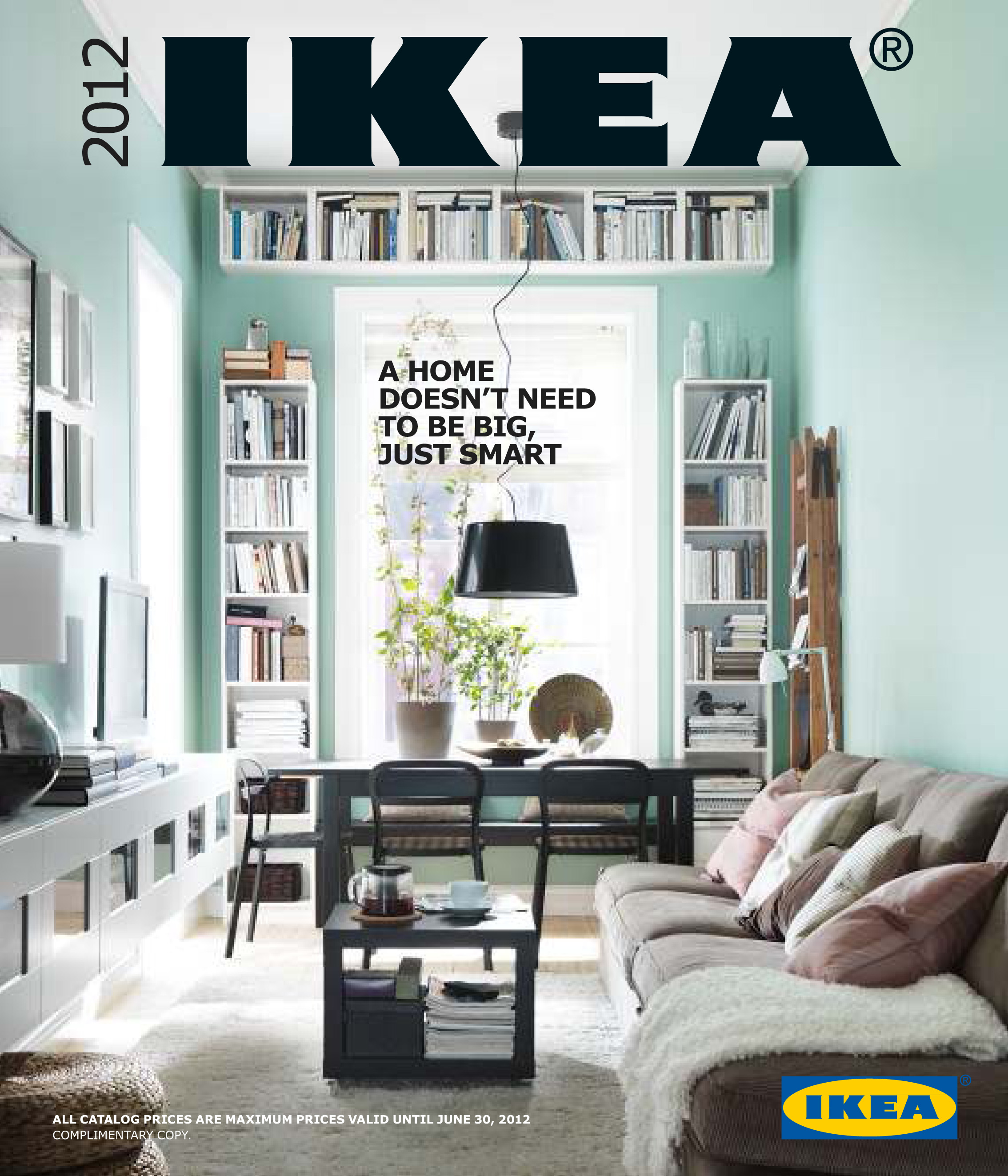
The latest catalogues, traditionally one of their main marketing tool, feature subtle differences in the design and content of the editions for UK, US and China.


(from L to R, top to bottom – UK, China, US.)

Notice the subtle differences between the shot on the cover of the Chinese version and the US version.

Is there any brand that looks the same anywhere in the world but distinctively feels different locally in your market? I like to hear from you.

Twitter: @louiechow

A lot of people asked me about the strategy and techniques of adapting creative content for different markets. Many people think that it’s all just about language and at the most requiring some image changes. I often approach it from a very different way. I look at the strength of an idea and re-imagine how this could be manifested in different market, appealing to a different set of consumers – sometimes even tweaking it to fit into the different consumer profiles and tastes in different countries.

I came across with this latest commercial of Blackberry and thought I like to use this as a simple example to illustrate what I meant by this holistic way of adaptation.

The commercial here promotes the new features of the Blackberry Bold in a simple, product oriented way. By using an orchestra soundtrack highlighting the smoothness of the way you can navigate all the features and subtly suggesting how all the features work seamlessly together.

To adapt this, the same idea can easily be transformed brilliantly in each market with diverse culture simply by composing a soundtrack using very local musical instruments that are unique to that country – from Japanese, Chinese, Thai, Korea, Middle East, India, Africa or…even regional music such as Scottish or Irish. In fact this idea can even be elevated to create specific spot for each target segment – such as using a background music featuring opera (targeting to the posh) to hip-hop (for the much cooler community! Bring it on Jay-Z)

By doing so, you enhance the idea and not just ‘translating’ it.

With a bit of creativity, any idea can work brilliantly in each local market; and all ideas should behave just like it was created specially for the local consumers.

In future blogs I will share with you other useful techniques and approaches. I like to hear your thoughts.

If you want to take your creative ideas global, just tweet @louiechow #takingcreativityglobal

When the Coca Cola team presented the ‘Liquid and linked’ marketing communications platform at theCannesseminar this year, I could see that there were more than just a few nods among the audience.

Not only is the Coca Cola one of the most respected and iconic global brand, they are also someone who had throughout the years been able to maintain a truly cohesive brand culture. With the ‘Liquid and linked’ marketing communications, they have actually summarised beautifully one of the common themes atCannesthis year; and have in their own way, rebranded the most talked about definition of integrated marketing.

The digital media had been one of the hot topics in the past few years at Cannes. However, arguably it is only this year when everyone from clients and the creative folks have truly embraced the value and effectiveness of digital media. For creatives like us, we also see this as new playground to create compelling and engaging connections with people.

The challenge in making the most of this new model of marketing communications is how all these interconnected activities and initiatives can be effectively and strategically linked and organised; and instead of purely mist of brilliant small ideas, they should be connected and help to create the most powerful and long lasting brand, that people will remember and ultimately, building long term brand equity.

I foresee there are a few emerging trends:

Ideas need to be organised:

In the ‘Liquid and linked’ working model, there are multiple content created by multiple partners. In the traditional model where it was 30 sec centric, the TVC often takes the lead in shaping and leading the dialogue (if there were a real dialogue at all in the old days). Whereas in the truly integrated model, any kind of media can be at the very centre of the interaction. I think the way Droga5 described their winning entry for Microsoft illustrated the complexity of a truly integrated campaign:

“…The target does not differentiate online from offline, so we built the program across existing media formats and channels but in a new way that wove them together and added interactive to everything. The target audience is wary of marketing messaging and needed to use Bing technology to change any perception of it or increase overall usage. Our campaign worked across media channels in a new way and put the technology at the heart of the marketing…”

When the campaign structure is no longer a simple hierarchy, planning takes on a whole new level of challenge. The need to organise big idea and liberate everybody to do really fantastic thing in each channel is crucial. We also need to make sure all parties involved in the process can benefit from each other’s knowledge and expertise.

This can be achieved through a combination of technology (building the basic logic to the system, enabling knowledge transfer and asset sharing) but more importantly, it needs a truly visionary leadership who can mastermind a unique roadmap of the brand story.

Co-creation and collaboration is more important than ever:

Co-creation and creative collaboration is something I have been advocating for many years having worked with a network of creative talents in different countries. But now with the benefit of technology and the open-mindedness of clients, it has become a truly powerful way of working. And indeed, this means the traditional agency structure is being threatened and that’s why this year atCannes, agency roster is a huge debate and full-service agency is almost becoming outdated. Research indicated that today, global clients usually review their lead creative agency every two years. The key to keep your client is constantly being able to reinvent yourself and able to partner with a wide spectrum of creative talents. Change is the new constant has never been so true.

However, co-creation and collaboration should not be confused with crowdsourcing of creative content. I think we seem to have blurred the definition to an extent that I feel slightly uncomfortable with. Dave Alberts from Mofilm put it nicely as ‘curated crowdsourcing’ – instead of simply aggregating raw creative content from an open source, they encourage creatives to focus on a shared brand objectives and build storytelling around it.

Crowdsourcing without strategic thinking on the brand has the danger of creating communications that is simply generic to the category, and not something that builds on the brand history, vision and future direction.

New approaches in linking global content and local content:

As we increasingly strive for content that is ‘so contagious that cannot be controlled’ (in the words of the Cola Cola’s model), the traditional way of localising global campaign need to be reconsidered. Not only there is no one size fits all solution, it’s increasingly important to be able to create local content that ‘linked’ to the global platform rather than simply a versioning exercise. The new trend is global coordination and local customisation; and when we talk about customisation, we are also talking about transforming content from one media to another locally, using the most powerful way of communications in each local market.

To global brands: what kind of ‘liquid and linked’ marketing communications is suitable for you? Do you give space for your creative talents to try out new ideas that are contagiously brilliant? Are your agencies able to create content that are well-connected and ‘linked’ in the increasing complex media landscape?

To creatives: Are you still thinking in the old fashioned 30 sec centric way or are you able to approach in a media neutral manner? How connected are you with other creative talents working on different media of the campaign?

Here you can see a video archive of Coca-Cola Content 2020 presentation by Jonathan Mildenhall:

I recently hosted a training session on the importance of creative briefing; in particularly the kind of briefing that is essential for multi-market, multi-channel work.

My focus, therefore, was not only on the typical brief that is created for one single market, but rather the brief that allows global ideas travel and being executed across different cultures.

It’s becoming a norm for global brands to hire multi-agencies on specific tasks, from creating the global platform to global centralisation, adaptation and implementation; from events and experiential, digital and social media, media planning and buying to retail activation and PR. The benefits are many and one of which is to let each agency to focus on what they do best; however, the danger often is there is a lack of co-ordination among the agencies and the 360 activation fail to embrace the umbrella platform.

It is absolutely essential to agree on a universal global brief that guide the tone and manner of everything around it. The master brief will most likely be coming out from the lead creative agency. It should focus on the bigger picture and the universal truth across all media.

What will then be important is for each specialist agency to build on the ‘master brief’ and extend it by applying the thinking that is relevant to the media they are responsible for.

The creative activation agency will also need to exercise their creative muscle and apply cultural insights to interpret it effectively for each local market. This also include unearthing any significant local market landscape and brand/ product lifecycle in each market; so that we are not simply standardising the solution but truly crafting out an execution that is true to the global platform while expressing in a unique voice in the local market.

Here are just a few examples:

Blackberry’s ‘Love what you do’ positioning is reinterpreted and manifested in India in a campaign entitled ‘Blackberry Boys’ featuring bright young things joining the well sited cool guys for an all star sing-along. The right tone, in the right place.

Holiday Inn Express hotels are positioned as the contemporary choice for value-oriented travellers in almost every parts of the world, but in China, the brand has a twist and emphasis is on the ‘smart choice’ of the guests. The tone and manner will need to be slightly adjusted in such markets.

The brief for the local market is no less important than the master brief, in fact in some circumstances it is even more complex since not only you need to maintain the integrity of the brand globally but creating an execution that let local consumers feel close to home.

The key is to identify a common language – the universal truth that is broad enough for local creative implementation.