It’s Chinese New Year on February 19. The Spring Festival is regarded as the most vibrant gift giving and shopping season in China, and therefore one of the major push for many leading brands. Many global advertisers follow the same old formula year after year, while others try to break away from the norm and do something different.

Pepsi curated a “crowd-sourced video” inviting consumers to submit 15-second videos via Mei Pai 美拍, a local mobile video app, to form a tribute to family reunions. The crowd-sourced final cut video will be eventually simulcast on the big screen in New York’s Times Square, symbolically bringing something local to a global stage. At the same time, the “Bring Happiness Home” themed promotion will deliver over 2000 postal parcels to help the mothers in the remote mountainous regions get through the cold winter days.

Apple, on the other hand, had taken this opportunity to unveil their first TV commercial produced specifically for the China market.

It has been an epic few months of localization activities for Apple. Recently they have opened five new stores timed right before the Chinese New Year. Four of the stores are in brand new cities for the brand including Zhengzhou, capital of central China’s Henan Province, West Lake in Hangzhou, Zhejiang Province. In each location, they have strategically partnered up with local artists such as Wang Dongling and painter Yangyang Pan to co-create signature murals inspired by each city for the local store.
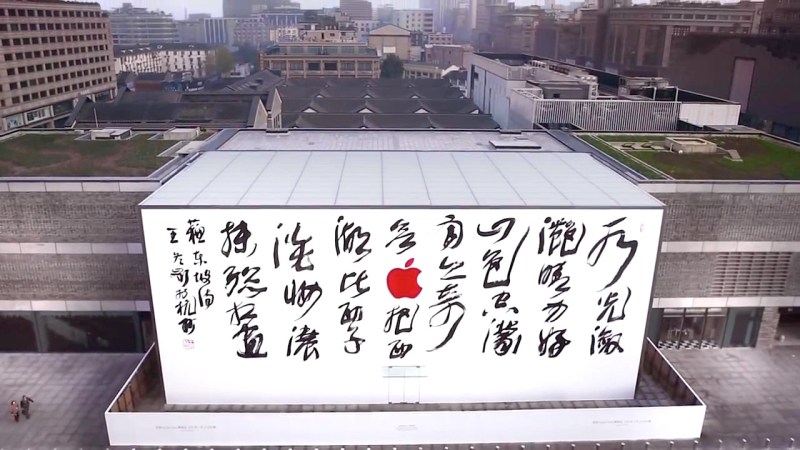
Apple Store, West Lake - About the Artist_00000

The TV commercial for Chinese New Year has been met with mixed criticisms. Directed by Ann Hui, best known for her films surrounding the topics of social issues, and cinematography by Christopher Doyle, a key collaborator in many films by Wong Kar Wei. However, you can hardly trace their signature style in the production. One of the main reasons, perhaps, is because they had to follow the tight guidelines imposed on the production – it has to be “consistent” with the global version. The story bears an almost identical storyline to a commercial entitled “The Song” released in the United States over the Christmas season in December 2014.

US “The Song”

China “Old Song”

Even though it is by large a just a localized version, but at the very least, there is a strong and relevant proposition. The storyline cleverly positions the brand being the bridge between the younger generation and the old, and technology plays a role in connecting the emotions across generations.

Different brands tend to adopt a different approach to localize brand messages for local market. In the old model, creating the localized version often involves so many levels at the client side. Depending on the category of the product, it could involve anyone from the local marketing team, the regional marketing team and of course ultimately the global brand team. During the process, any form of innovative thinking will be filtered, reduced, modified, tweaked, abandoned, shot down, reinterpreted or misinterpreted.

Any creatives who had worked within international network agencies on global brands will know the challenges. Fortunately, some global brands are now doing it differently.

Apple now adopts a centralized approach – global ideas being conceived centrally, while implementation and production being done locally. Local content are developed following the global guidelines. Pepsi has adopted a more locally driven approach, leveraging current consumer trends that resonate well in the local market. While brands like Microsoft, they have established processes such as “global-readiness audit” to make sure the ideas and executions can travel well.

No matter which strategy you decide to adopt, one thing is for certain – if you want a cohesive global brand at all, you do need to think global at the time when the idea was conceived. The key to success is to create a truly global platform, which could be so fluid that it allows local interpretations without losing its integrity.

Most global brands prefer the 80-20 ratio of global-local content – to adopt 80% of the content centrally and globally, and allow local market to reiterate and adapt 20% of the content to enhance local relevancy. I personally advocate the 70-20-10 model in which 70% of efforts focus on delivering quality global communications riding on universal truth, 20% on pushing the boundaries to contextualize it with local nuances, and 10% on ideas and approaches which are unproven but could transform the marketplace in each local market.

Which model works best for you highly depends on how you structure the global-local team, and where you put the right kind of resources.

It’s also not easy to motivate creatives to get all excited to work on adapting global ideas, but you can create the space and environment to allow creativity to grow. Here are a few tips:

  • Human insights trump cultural ones. Avoid merely dressing up the global ideas but rather go deep into the reasons why, because that’s what true consistency is all about.
  • Nothing should stop you from creating something that is uniquely local; using very native expressions as long as underlying it there is a meaningful concept that everyone understands.
  • Construct a platform that local teams can “build on it” fluidly and not wasting their time to think of how to make it work.
  • Give anyone on the ground the tools and resources to thrive in scale. Be brutal in keeping the platform intact and trust your own instinct.
  • Consensus is not about everyone agreeing, it’s about everyone being heard and the rallying around the best answer. Never go for the lowest common denominator.
  • You can’t tell creative people to be creative, but you can let them.

I wish everyone a prosperous year of creativity.
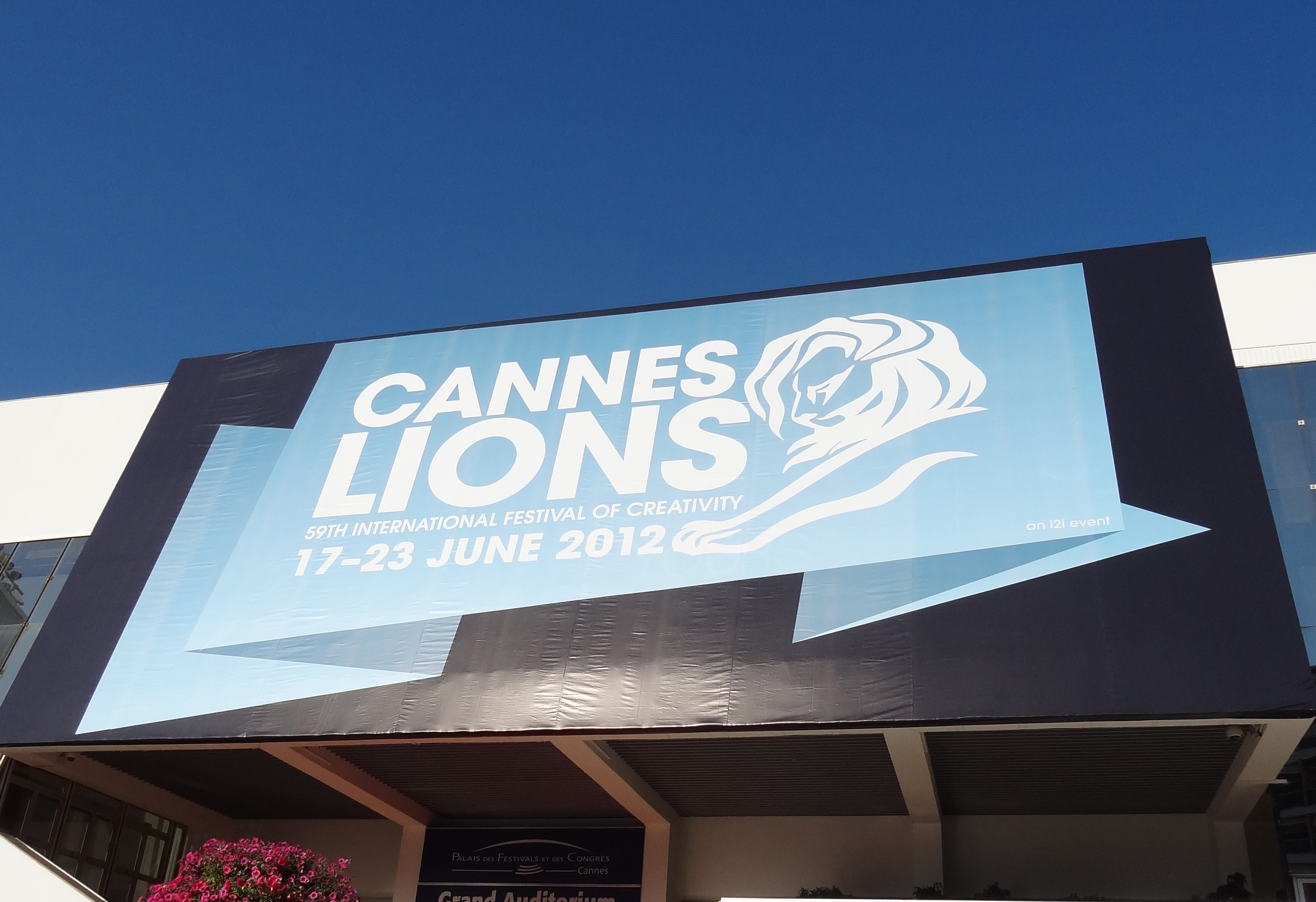
With all the best creative works in the world, hundreds of hours of seminars, forums, workshops, screenings, not to mention the chance to catch up with creatives from all cultures (and scanning QR codes on each other’s name tag), Cannes Lions remain the definitive global event that the whole industry converge, debate and celebrate. ‘Rethinking’, ‘redefining’ are the usual buzzwords at Cannes. It’s a time to take stock of what we do and what it means to us, to our clients and to the industry as a whole.

Here are a few personal favourites, takeaways and observations.

Diverse talents

Every year, the winning works in Cannes often lead to healthy debates and discussions. This year, the most talked about winning works were from some of the most diverse talents.

Ogilvy Shanghai’s entry entitled ‘#CokaHands’ that won the agency a Grand Prix in the outdoor category was designed by Jonathan Mak, a 20-year-old Hong Kong designer. Some people questioned what the agency’s involvement in the creation of the work and whether ‘co-creation’ deserved to win in Cannes. The truth is, creative ideas can now come from absolutely anywhere. The role of creative directors is increasingly becoming a ‘curator’ of talents or a ‘conductor’ of ideas from various disciplines. The power of an idea sometimes depends on the content created by the crowd. It wouldn’t surprise me that in the future there will be an award dedicated to the public.

Connected thinking

In the past few years, digital had been the hot topic. This year, it’s all about ‘content’. The Festival afterall, had been renamed as the ‘Festival of Creativity’ for many years and it now covers creativity across all disciplines. This year the Festival had added new categories including ‘Branded Content and Entertainment Lions’ and ‘Mobile Lions’. For ‘Branded Content’, it was defined as “the creation of, or natural integration into, original content by a brand”. The new categories reflect the diverse formats of the creative content being created, making sure the Festival remain relevant to the evolution of the industry.

The conventional ‘art director + copywriter’ creative team structure is also becoming obsolete. In order to create truly innovative solution for clients it’s more common for creatives to be teamed up or partnered with technology strategists, or in some cases, producers in the entertainment business.

I feel strongly that the new breed of creative talents will all have the natural capability of ‘connected thinking’, and integrated approach will be at the heart of everything we do. Just look at the Grand Prix winner in the ‘Ambient’ category entitled ‘The Invisible Drive’ promoting the Mercedes-Benz F-CELL hydrogen-powered car. The outcome was that the big idea connected with consumers as wide as social media, PR and mobile channels. Ambient or mobile is no longer the ‘peripheral’ media but in some cases they become the key to integrate other touch points.

Another remarkable example of truly cross-disciplinary thinking was Nike+’s Fuelband, which Stefab Olander said in his presentation, that the products and services had become the marketing. Bob Greenberg of R/GA described Nike is a ‘functionally integrated’ company that offer ‘seamless, interconnected services and experiences, not just products’. This way of thinking will become the DNA of future brand architecture, and naturally influences how we as creatives tackle the challenge.

Democratisation of content

A couple of years ago, when MOFILM started to challenge the industry by introducing a new content-based democracy, inviting film production talents from all over the world to crack the creative brief and produce content for big brands, a lot of us were sceptical about the practice. Was it just a trend? Was it created out of brand’s desire to shop around for ideas and driving down production costs? Today, it all seems to make perfect sense. Not only has it met the demanding nature of the explosion of multi-screen channels, it actually turned out to be a totally viable model to unite production talents from creative agency, film and the music industry. Clients also become more involved and actively participating in the creative process. But I think the most exciting development is in nurturing new talents. The ‘Welcome to the industry’ initiative from MOFILM, has already starting to break down the barriers within an industry historically being dominated by a few big giant production houses.

Clients believe in magic

In one of the Cannes stories showcased in Cannes, Sir Martin Sorrell said ‘creativity is what makes clients’ precious marketing budget goes further’. Cannes has always served an instrumental value of promoting the passion of creativity not just among creative teams but also among clients. It’s an opportunity for clients to witness why creating and producing good work matters to us, and how we could work together to build trust and empathy towards meeting each other’s objectives.

In the seminar ‘Can your Client Be Your Friend?’ Joel Ewanick of GM and Jeff Goodby demonstrated what’s the perfect client agency relationship is. When your client starts a conversation and you complete the sentence, that’s good partnership. An agency is not a ‘service provider’ but someone to help connecting the dots.

Local creativity shines

The international representation of the delegates has boosted the importance of local creativity. Local creative talents had been given the opportunity to showcase the unique creative approach that often creatives from other culture do not understand. Brazil had set up their design focused showcase, China Advertising Association promoted the creative culture through mobile technology, production house from Russia and digital group from Thailand all tried to take advantage of the opportunity to reach out to international creatives. Mexico had even erected their ‘pop-up’ venue just across the street from the Palais with the aim to welcome clients and creative talents who like to know more about the market.

Among all the seminars, Korea made a point about their ‘cultural assets’ with the recent success of K-Pop phenomenon, and Japan took to the stage and shared with us the success story behind the global icon of Hello Kitty being localised for different markets. Julian Boulding from the Networkone continued to showcase work of independent creative agencies from China to Spain and Sweden, the presentation not only was about sharing the great work coming from independent agencies, but also the unique approaches that reflect their local culture. My favourite, however, was the local pride demonstrated by R. Balki, Chairman and CCO of Lowe Lintas India and Shekhar Kapur, Oscar nominated director. Balki firmly believed that the desire of India is to remain India, and when he said ‘Where there is a difference, there is a creative interest’ he addressed the issue of global advertising head on. I salute to that.

Creativity for good

There has been much talk in recent times about how the advertising industry should use our wealth of creativity to help change people’s behavior for the benefit of the world. That message was amplified when former President Bill Clinton gave a heart-felt and compelling talk in Cannes. Not only did his insight and global context made the case impressively, the topic was also timely and very much in line with the current trend of ‘building brands for good’. He also pinpointed our role as creatives is to spread the information and get it right. He said “A lot of the facts that will form the trends of the future are not apparent to people. The communicators will have a profound influence on how the next 20-30 years will turn out…People need honest communication. You can do that.”

Indeed, some of the freshest ideas that won in this year’s Festival were rooted from a desire to create something meaningful and useful for people. Examples like the Chipotle’s ‘Back to the Start’ film combined with the brand’s Cultivate Foundation. The ‘Unhate’ print work from Benetton connects the brand with social responsibility.

The cream of the crop I think clearly goes to the ‘Help Memories Bandages campaign’ created by Droga5. The campaign had turned marrow registration as a part of an everyday act by putting a marrow registry kit into a box of Help Remedies bandages.

A standing ovation

In an industry that brings in fresh new talents every year, it’s important that we pay respect to the gurus who had shaped the idea of great advertising over the years. This year Google’s ‘Re: Brief’ project had done exactly that. The project aimed to challenge whether the most iconic advertising campaigns can be ‘re-imagined’ for a modern audience. We had the chance to meet Paula Green, the original copywriter who authored the Avis slogan ‘We Try Harder’ and Harvey Gabor, the art director who helped to make the Coca-Cola ‘Hilltop’ TVC a global success. Google’s objective of this campaign was to prove that digital channels could extend any big ideas in innovative ways. For us, witnessing the collaboration between the legendary creatives and the bright young things was simply a joy. By applying fresh thinking, innovative creative ideas sometimes could be born out of genius adaptation. No wonder at the end of the seminar, the adland legends received a standing ovation from the audience.

Before it all becomes distant memories, what are your best bits of this year’s Cannes Festival? I like to hear from you.

I will also expand some of these themes in future blogs and apply insights from a local perspective, please join in the discussions.

I stumbled upon an image on facebook recently and it had stuck in my mind for a long time. It’s a facebook page of InterContinental Hotels where guests post snapshots of the hotel from all over the world. It’s a fantastic collection not because it is completely from the eyes of the consumers; it also illustrates one interesting thing – the hotel looks and feels so differently in each market.

This got me thinking…how does brand consistency apply in this context? Is consistency really relevant after all? Or perhaps we need to redefine the conventional definition of consistency?

What about global brand guidelines? We often hear branding specialists emphasize that in order to maintain global brand consistency, local markets need to be provided with over-arching guidelines about presentation, logo use, images and tone of brand messages, often in a manifesto or marketing book. However, many of these brand guidelines are over simplifications or generalizations that often have not allowed the breath of thinking.

I think consistency is an attitude. It’s more about the ‘how’ than ‘what’.

Intelligently local

As brands become more national, multinational or global, they realize that not all the consumers in each market have the same needs.  The need for global brands to be transformed and make sure they are locally relevant is increasingly important. In the travel industry, for example, hotel brands have been increasingly adapted to the local needs.

Accor has revamped its Grand Mercure brand in China, offering products and services tailored for local clientele, in a move aimed at taking advantage of the booming upscale domestic travel market.

Grégoire Champetier, chief marketing officer of Accor said “Our clients are now expecting brands capable of understanding the diversity and the complexity of their identity.”

The re-engineered branding for Grand Mercure, referred to in Mandarin as Mei Jue (美爵), was unveiled at the inauguration of Grand Mercure Shanghai Zhongya, the first hotel adapted to the new positioning. The group’s nine other similarly branded properties in China are due to adopt the new identity.

In Shanghai, employees will be conversant in the local Shanghainese language (a dialect that is class-defining in mainland China), and guests will be welcomed by staff wearing Qipao, a traditional evening dress (Think Maggi Cheung in the Mood for Love).

All local staff will be identified with name badges bearing firstly Chinese characters, followed by a pinyin equivalent enabling them to use their given names rather than adopting foreign equivalents.

Other signature services include daily Tai chi lessons, and complimentary head and shoulder massages (Chinese style presumably) for guests staying on premium floors.

The Grand Mercure brand provides Accor with a fresh platform for organic upscale expansion throughout the country. The opportunity for organic growth in the upscale hotel segment in China is one of the largest in the world. Accor’s tailor-made Grand Mercure product has already garnered great support from hotel owners. Accor currently operates 10 Grand Mercure hotels in the country. Accor has confirmed commitments for 10 additional hotels, and announced that it will expand its network to around 65 hotels in tier 1 to tier 3 cities throughout China by 2015.

Authentic global

The concept of globalization often carries a dose of negativity. By definition, globalization means the ‘process by which the peoples of the world are incorporated into a single world society’, which indicates the process of standardisation. However, in an increasingly interconnected global economy, many of us cherish our local roots. Some global brands understand that and promote ‘now localism’ in their brand strategy.

Hotel Indigo is what IHG considered to be their nearest to a non-hard brand.

As their CFO of EMEA and head of development for Europe for IHG, Paul Edgecliffe-Johnson, once said “A good brand is one that does a lot of research into what consumers want and designs something around that”. In fact they have put this in practice and bring in the feeling of the locale wherever they go. For example in Liverpool, the hotel focus on the music scene, in Shanghai it captures a strong Chinese-feeling.

Bart Carnahan, senior VP for acquisitions and development of Starwood Hotels & Resorts Worldwide once commented on the pros and cons of hard branding versus soft branding: “St. Regis for us is hard-branded—you know what you’re getting”. Luxury Collection is getting close to these white brands, it has some core consistencies throughout those brands, but it gives more breadth to owner developers, so it’s not so rigid. Carnahan said Starwood’s upscale brands have to have local designs to get that eclectic local feeling and the company wants some of the luxury brands to be.

Not just local, it’s your neighbourhood

Going one step further, the notion of ‘place’ is such a core of the proposition that certain brands has gone all out to adapt to local market needs. Statbucks is one such brand. In Seattle, 15th Avenue Coffee & Tea looks nothing like a Starbucks. But, this new café, named after the street where it is situated, is a Starbucks. Starbucks has decided to un-brand it’s newest location in Washington DC. By featuring local entertainment, sourcing from local bakeries and donating leftover food to the local parish, these new un-branded cafés aim to integrate themselves into the fabric of the neighbourhood.

Consumers are turning away from the allure of globalization and massive brands for the comfort of localization. In the US, we stand poised to see the resurgence of neighbourhood. How can your brand capture local character and appeal to consumers’ by providing them with a greater sense of identity and belonging?

Here, I am leaving with you some food for thoughts:

What consistency means in global brand management nowadays? Does it need to be redefined?

If brands need to be localized, what are the impact in the process of creating and implementation of global campaign?

If one-size-fits-all marketing tactic does not work for certain product categories, what are the implications of adapting global ideas for local markets?

What do you think?

Apart from a few obvious global giants, few brands establish dominant positions in multiple markets. Often this has become one of the main challenges for brands to create one single global creative platform.

There are a number of reasons behind it. Different perception and taste of the product is one, what I call the ‘marmite effect’. Or the product could simply be reaching a totally different product life cycle in each local market. Orangina is one such example.

When Miss O meets Tora-san

In France, the brand began its production in 1963 and has been so established that, arguably, it has become a lifestyle brand. In its popular advertising featuring the classic Orangina Rouge to the controversial ‘furry animals’ campaign back in 2008 through to the most recent ‘Miss O’ creative platform, it’s all about creating buzz and keeping the brand fresh and current in the mind of consumers. It’s what’s outside that counts!

In the new series of spots by Fred & Farid Paris directed by Joseph Kahn, the lady wolf is portrayed as a heartbreaker, in “Working late” she lies to her wimpy boyfriend and then in “Dump”, she breaks up with him in a very public way. The work, centred around the wolf, who is Miss O, asks you who really is the boss when it comes to relationships.

The local culture also provides a perfect playground for such creative platform to flourish, share and engage. The tagline “C’est qui le sexe fort?” (creatively adapted as “Who is the boss” or literally means “Which is the strong sex?”). Interestingly, the French consumers with GSOH are not steered to take the message literally, and the creative idea was instantly recognised, accepted and embraced.

On the other side of the globe in Japan, Suntory acquired the Orangina brand in 2009 and the new-look Orangina replacing the classic pear-shaped bottle was just launched in March. As a relatively new brand in the market, being French has its advantage. The recent ‘Toro-san’ campaign featuring Richard Gere rides on that ‘foreignness’ and was distinctively designed for that market.

In the launch commercial, Richard Gere appears as Tora-san, the lovable ‘loser’ in Shochiku’s very popular 48-film series of Japanese comedy movies entitled 『男はつらいよ』(It’s Tough Being a Man). Not only is he a contemporary adaptation of the original character played by Kiyoshi Atsumi, the commercials also use the same iconic music “Otoko wa Tsuraiyo” from the series.

The original Tora-san in 『男はつらいよ』:

The underlying message is that the brand is a western idea adapting within the framework of the Japanese culture. By riding on the character of Tora-san who is famous for being a bumbling Mr. Everyman, gives the brand personality a distinctive western dimension.

George Field wrote in his book “From Bonsai to Levis” (1983), and commented that in Japan culture, contrary to the stereotype, the woman is the boss (in the context that Japanese women control the purse strings in the family and are well positioned to occupy the seat of power).

There is an intriguing irony between the dominating ‘Miss O’ and humble ‘Tora-san’ here. Though I have a feeling that it is just a happy co-incidence, I cannot help but imagine what if ‘Tora-san’ meets ‘Miss O’, could that be a marriage made in heaven?

Could that be a cross-border joint production and creative adaptation?

One might argue that going for a completely localised approach, it means that it will be a long way when Orangina can create a truly global brand that captures a common language as in the case of some other globally aligned beverage brands.

For the time being, the brand may not be able to take advantage of the costs efficiency enjoyed by creating a centralized global idea that many marketers aim for, but they certainly give the brand an opportunity to grow with the local market at the right time, in the right place. This also reinforces the belief that there is no single, optimal answer to the question of how to manage a global brand.

It’s 9 pm and I have just finished skyping some of my creatives in Russia to double-check on a heated debate happening in the world of global marketing. I wanted to be absolutely sure before I add to the rather controversial discussion.

On 21 March, Kraft announced that its new global snacks company will be named Mondelēz International. (Please note there is a crucial macron over the second ‘ē’ – which a lot of journalists did not include, in fact, neither does it appear in the body copy of the press release from the official Kraft Food corporate site.)

The company said the name (pronounced mohn-dah-LEEZ) was inspired by the suggestions of two Kraft employees. It is intended to evoke the idea of a “delicious world” as “monde” is derived from the Latin word for “world” and “delez” as an expression of “delicious”.

Jez Frampton, global chief executive officer of Interbrand Ltd., talked about Kraft Foods Inc.’s name change to Mondelēz on Bloomberg Television, referring to the move as a clever idea.

Here’s where the debated started. After the announcement, it was quickly reported that when pronounced as “mohn-dah-LEEZ” the name immediately drew feedbacks from Russians. Apparently, it means something else to Russian speakers, say those fluent in Russian slang (when pronounced, it sounds like the Russian slang for a sex act). After  checking with a few Russian copywriters and they all confirmed that people will certainly make fun of it; they also believe that the male audiences will likely be the ones to be starting the joke.

Back in August last year, Kraft already announced officially that the company would be splitting in two by the end of 2012. And like any creation of a new name, it had gone through a long process. According to Kraft, they have crowdsourced ideas from employees, and more than 1,000 participated, submitting more than 1,700 potential names. The inspiration for Mondelēz came from two employees, one in Europe and another in North America. From what it sounds, it was probably the result of a blend of two ideas.

Kraft also commented that they have properly vetted the new name. According to John Simley, they have done “extensive due diligence in testing the name…that included two rounds of focus groups in 28 languages, including Russian. We determined misinterpretations in any of the languages to be low-risk.”

Many people blamed it on the language issues, and indeed quite a few blunders like this had happened in the world of international marketing and branding. I recall here just a few examples:

  • When Volvo first came to America, the brand also drew controversy because of the similarity between the Swedish car manufacturer’s name and female anatomy
  • General Motors had to change the name of its Buick LaCrosse sedan in Canada after it found that the word LaCrosse is slang for masturbation in Quebec
  • On Bugati‘s website in December 2010, they have advertised a car available in “rape yellow” which was the result of French to English translation error of “rapeseed plant”

Naturally, we question why the problem was not spotted within a big multinational company with multi-cultural staff? What about the creative or brand agency who had provided consultancy service to the client? What about the research company who orchestrated the focus groups in 28 languages? Did they do the research locally?

I believe the reasons are sometimes more complex.

Even if they have conducted naming research, my speculation is that due to the confidential nature of the research, they may not have revealed the full context of the name, so the respondents only were able to respond to a very tightly defined definition, or the questions were set in such ambiguous way that people could not give the feedbacks judged from the whole background.

Another possibility is the reasons behind the name change often could be complex and all the stakeholders contributed in the decision process, which often ends up in a ‘mish-mash’ of messages. A small twist to a name often will end up a disaster. Not every name change could be as lucky as and managed to conquer the challenges like Accenture (formerly Andersen Consulting) or Altria Group Inc. (formerly Philip Morris).

Let’s just take a look at some of the recent name changes and their rationales behind it, and you’ll know what I meant.

Abbott Laboratories spinoff will be named AbbVie

“The beginning of the name connects the new company to Abbott and its heritage of pioneering science. The ‘vie’ calls attention to the vital work the company will continue to advance to improve the lives of people around the world.” According to Richard Gonzalez, CEO of the drugs business.

Sara Lee Corp.’s beverage spinoff will be dubbed D.E. Master Blenders 1753

“When determining the new name, we thought of things like strong heritage, leadership, dynamic brands, bold growth, operational excellence and a great place to work…D.E Master Blenders 1753 captures all of those elements.” According to Michiel Herkemij, executive vice president and chief executive officer, Sara Lee International Beverage.

Corn Products Inc. will rename as Ingredion

“As the current name would suggest, Corn Products make a number of food ingredients from processed corn, like starches and sweeteners. But the company also makes ingredients from tapioca roots, like starches that add texture to dairy products” According to spokesman Aaron Hoffman. And according to the CEO Ilene Gordon it will reflect a shift in business strategy, but it would better represent the company’s pallet of products.

Relaying on a name to encapsulate a huge ambition may well be one of the main reasons.

Whether the name Mondelēz will be under further scrutiny is unsure and whether the company will evaluate all the feedbacks from the public is yet to be seen. At the time of writing this, we understand that Kraft is also working with the creative firm Attik on a corporate identity for Mondelēz, let’s hope some magic could be done to rectify this situation.

I would like to hear your thoughts.

Mother’s Day is celebrated on different days and dates around the world. But in almost every culture, mothers play an important role in the family. Brands understand that, and will take every good opportunity to win over their hearts.

In the Chinese culture, women often are the ultimate decision maker in anything related to the household. Here’s a brilliant analyses of this insight from Tom Doctoroff:

Despite Mao’s famous saying that women hold up half the sky, even “liberated” female consider their role inside the home paramount. In the West, working mothers struggle with balancing career and family satisfaction. In China, the battle is much less fierce; the kid wins, hands down…So, to bond with your female “head of the household” target, tell her she is really really needed. Without her, there would be no family harmony.

In America, mothers don’t really want to see the “perfect mom” in advertising. They consider that the image of perfection is frustrating to watch, rather than aspirational. Kate Reddy, played by Sarah Jessica Parker, in the movie I Don’t Know How She Does It only exists in fairy-tales. On the other hand, if brands portray the “real mom” image, it is too close to home – a reminder of the frustrations, rather than a positive view. However, one thing they have in common – they all want to see a positive image that shows the brand delivering a realistic improvement in their life.

In the Thai culture, where people in urban families rarely show their love to each other publicly, a commercial by DATC (see below) made it even more inspiring, and in a way, started a ‘movement’ in the local market.

From food, financial services, retail, communication products to public service; and from China, Thailand, Singapore, Brazil to the UK, this emotion works unfailingly. When executed well and honestly, the effect could be very powerful.

At the time when we celebrate Mother’s Day, I would like to share with you some of the commercials from different countries that capture this sentiment.

I also love to hear from you if there are any great campaigns describing the love of mothers that reflect the unique culture of your country.

John Lewis, United Kingdom

LamSoon, Hong Kong

DTAC, Thailand

Thai Life Insurance (Mae Toi), Thailand

TE AMO (I LOVE YOU), Brazil

thinkfamily.sg, Singapore

Note: This public service spot was directed by the award winning film director, Yasmin Ahmad.

▼Bud Light “Wedding Dress”

▼Oxo Cubes: Remember Preston

▼Calbee Cappa Chips: That’s Life

Heinz Baked Beans: Margaret

Tesco: Cheerful Sole

*Special thanks to Helena Rosario from Portugal and Nattavut Leekulpitak from Thailand who sent me their favourite commercials.

Happy Mother’s Day. Wherever you are.

A few thoughts on adapting global marketing campaign had been brewing in my mind for a while.

It all started with the ‘T’ word

In the past 10 to 15 years, when brands started to go truly global, one of the key steps they had taken was to align their brand advertising to achieve synergy in every market they advertised. At the same time, they started to realise that translating the marketing message in foreign markets was no longer enough, that’s when ‘transcreation’ (in global campaign) came about.

That was the time when I was recruited by a London agency specialised in this revolutionary approach. I moved from Asia and joined the original visionary team that determined to make it happen. I started to leverage my creative agency background to build a network of creative writers around the world, expanding the company’s talent pool from just key European markets to pan European, Asia Pacific and beyond.

Nowadays, the creatives that I have handpicked, have collaborated with global brands across the whole industry and had become the early adopters of this discipline.

At that time I didn’t really refer the service as ‘transcreation’. I defined the approach the same way as any local copywriter creating brand stories for the local market – the only difference being the global idea formed the backbone of any creation.

In many ways, my philosophy has never changed.

What does ‘transcreation’ really mean?

It reached the point when more and more people talked about ‘transcreation’, and marketing agencies (even translation companies) started to reposition their services to match the growing trend, the true essence of the meaning had become blurred.

In previous blog posts I have already expressed my view on the many misguided definition of ‘transcreation’.

Many people over the years had attempted to define it, with little clarity.

In the world of global marketing, the term has been loosely adopted to describe the kind of adaptation work that adjusts to the culture of local markets.

Within the marketing implementation industry, the term had been used just because this is, up till now, how most marketers understand it.

In fact, I have always had a concern about how people actually understand it.

It gets a bit ‘cloudy’, and does not help in showing the true value of the work when it is being done properly.

If you think all it involves are avoiding all the cultural pitfalls in foreign markets – expressions that does not mean anything in a foreign market, colors that create negative connotation or customs that is frowned upon in a different culture, then think again.

Let’s take a step back and consider the brief origin of this term:

Transcreation was originally used to express a literary tradition of India especially after the emergence of modern Indian languages. It was used to describe the people oriented and the time oriented creative translations of the ancient Sanskrit spiritual texts. This term originally used by contemporary writers like P. Lal for his English translation of the Shakuntala and Brhadaranyaka Upanishad (1974), is applicable for the whole tradition of creative translation of great classics like Ramayana, Bhagarata and Mahabharata in the regional languages from Sanskrit.

The methodology of ‘transcreation’ all makes perfect sense until companies start using it as a fancy term without fundamentally understanding the true impact of the output.

Part of the arguments in the past on ‘transcreation’ was on cost savings – one ‘master asset’ to be used for multiple markets. This argument is also gradually breaking down with the introduction of smart production process and technique, and the costs of recreating asset could be substantially reduced.

And that’s the reason why I like to challenge it and rethink what’s relevant in the current global marketing landscape.

Is ‘transcreation’ the only answer?

I developed the ‘creative adaptation’ service for some of our clients just because of this. By approaching it pretty much the same way as in approaching a brief from fresh, but taking the global brand and platform as part of the backbone of the local execution. By thinking 360° and activate the ideas in all touchpoints relevant to each local market.

The only challenge is, the line is so fine that only when you involve in the creative process, you often find it difficult to distinguish the differences.

I believe it is also intensified by the growing popularity and importance of digital and social media, where local executions are often the more preferred way to execute the idea. Locally developed executions are beginning to challenge the integrity of the global platform.

I think it’s time we approach it from a fresh angle.

Enter Trans-origination

Rather than approaching it in the contrived and often tightly framed manner – i.e. based on a master source and ‘transcreate’ it by applying necessary adjustments and changes to make it suit the local market – we approach it the same way like the thinking process of ‘origination’.

Origination: The act of starting something for the first time; introducing something new.

Only when we stop just trying to ‘shadow’ the master source materials, will we be able to think out of the box like a local.

Part of the arguments in the past on ‘transcreation’ was on cost savings – one ‘master asset’ to be used for multiple markets. This argument is also gradually breaking down with the introduction of smart production process and technique, and the costs of recreating asset could be substantially reduced.

How to be a ‘trans-originator’

How should we approach ‘trans-origination’? Here are some tips:

  • Don’t get boxed in the literal context. Spend more time to identify the true universal truth and more importantly, what each market actually needs. The universal truth is more likely to be deeper than the copy message itself or just the ‘campaign tagline’
  • Understand the local market beyond just the confinement of the ad campaign in question. Consider every expression holistically – from naming through to corporate culture, from marketing communications to even model of after sales service – because these are increasingly important in creating total consumer experience.
  • Apply T-shaped thinking: if transcreation goes for the depth, trans-origination goes for the breath. Think about extending the campaign to media apart from the pre-determined channel of the ‘master asset materials’ – sometimes spending the resources to re-interpret it in a totally different media that works better for the local market will prove to be more effective and guaranteed better return of investment.

In a nutshell, don’t just do it, start asking why.

Some signs of the growing trend of ‘trans-origination’

  • Coca-cola’s ‘Open Happiness’ positioning was trans-originated as a social campaign in Philippines, a good-will ‘Make Tomorrow Better’ campaign in Egypt or as a fun-filled marketing stunt in America – all are designed to be the manifestation of the ‘happiness’ platform in a local context
  • Johnnie Walker ‘Keep Walking’ platform is trans-originated in the ‘Jonnie Walker House’ experience in China
  • Levis was trans-originated as a local brand dENiZEN primarily for China and will be marketed across Asia, transferring knowledge of the mother brand to a newly developed local brand
  • French fashion label Hermès trans-originated as a luxury brand Shang Xia for China in 2010
  • InterContinental hotel is going to trans-originated a new luxury hotel brand in China riding on the operation support of the master-brand but in a totally local brand identity

Less theory. More practice.

All the ‘T’ words that I have mentioned are not attempting to replace each other. They should be considered as different tools in a tool box – use the right one in the right time.

Trans-origination is not just a fancy term or an upgrade of the same service but a fundamental shift of thinking and approach in developing and adapting global marketing campaigns in the digital age.

For this reason, I think trans-origination™, is the future.

I like to hear your thoughts.

(No need to Google the term yet, cause you read it here first!)

Stop press: Just when I am writing this on my holiday I read that Starbucks will open its first coffee shops in India in August or September in 2012, and aims to have 50 outlets by year-end through a tie-up with the Tata group. With India’s strong tea drinking culture, I can see a perfect case for trans-origination in the brewing.

Nowadays I seldom involve in campaigns that cover only one market. I am also increasingly involving in brands that need to adapt creatively in different markets – as oppose to the traditional standardization of messages.

We are living in an increasingly transparent world. Globalization does not turn consumers into one homogenous type, it intensifies the differences between cultures. Marketing your brand in a different country takes more than simply communicating in a different language, you have to start from as early as the product development stage.

Not just local – brands get personal:

When it comes to lifestyle products, things get personal. If you want to connect with consumers on a personal level, global brands need to know how to strategically adapt it for the local market.

Ikea, the furniture retailer famous for its functional-yet-stylish designs, have experienced healthy growth in sales rise by almost 8pc in 2010 in China. The success as credited to the strategic decision to adapt the brand for the local market:

  • Creating an appropriate Chinese name 宜家 (pronounce ‘Yi jia’) which means “comfortable homes”
  • Great pricing strategy coupled with smart centralization of production. When first introduced in China, Ikea mostly attracted the affluent crowd simply because the prices were considered too high by Chinese standards. Nowadays, the prices in Ikea’s Chinese stores have been slashed across the board by over 50 percent.
  • The self-service concept of the customers driving their new bookshelves home and then assembling them themselves didn’t make sense to the Chinese, lessons were learnt and now home delivery is offered by outsourcing to a specialized company.
  • Creating localized product line such as special themed furniture sold only during the Chinese New Year. The range consists mainly of textiles that are red or patterned with the animals of the zodiac.
  • In each store, the Ikea store features large showrooms modeling various home furniture solutions for the local clientele. For example, in Beijing, people usually don’t have a big dining table in the living room (oh yes, dining table is seldom placed in the kitchen). Locally styled model dining rooms with small tables for just two or four people are featured.

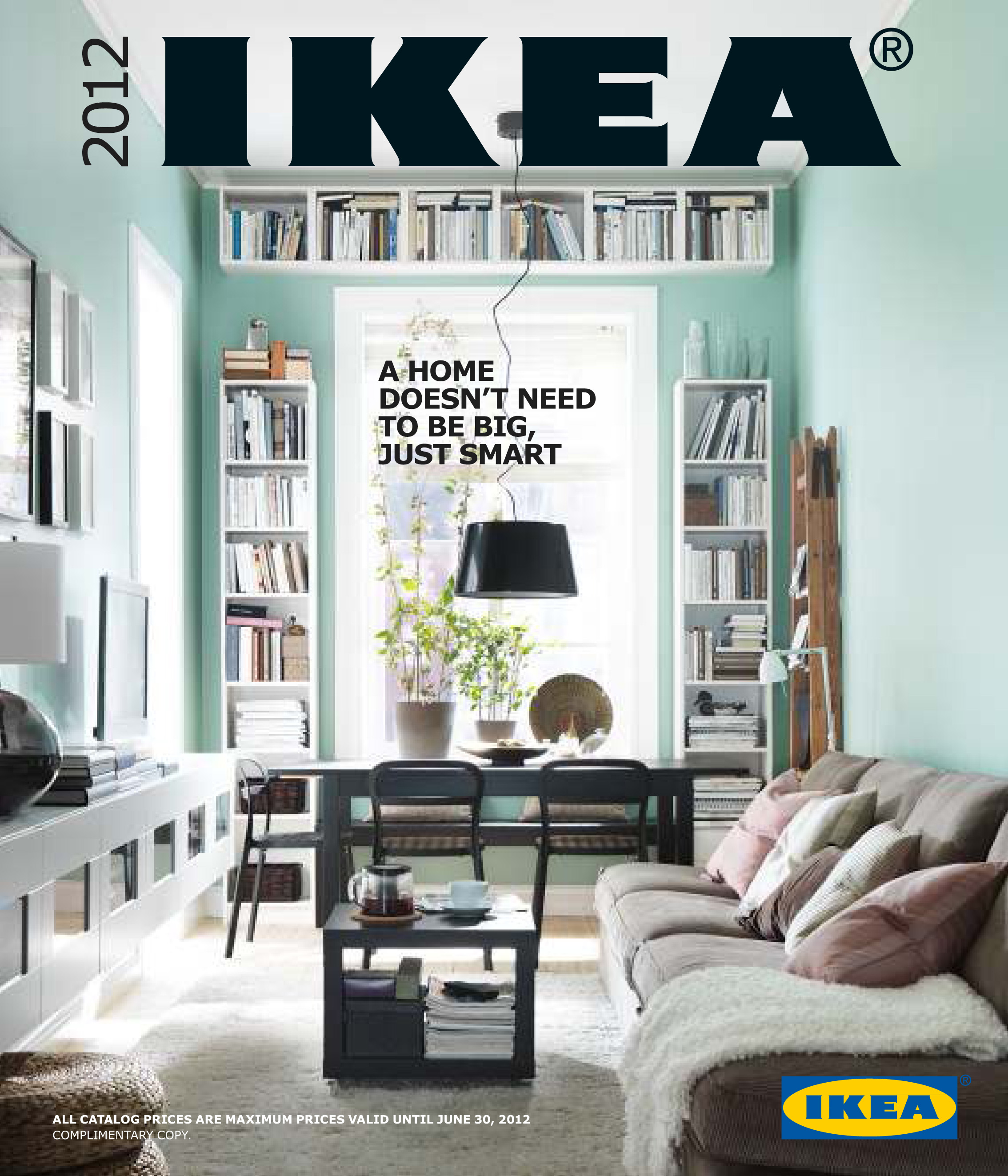
The latest catalogues, traditionally one of their main marketing tool, feature subtle differences in the design and content of the editions for UK, US and China.


(from L to R, top to bottom – UK, China, US.)

Notice the subtle differences between the shot on the cover of the Chinese version and the US version.

Is there any brand that looks the same anywhere in the world but distinctively feels different locally in your market? I like to hear from you.

Twitter: @louiechow

A lot of people asked me about the strategy and techniques of adapting creative content for different markets. Many people think that it’s all just about language and at the most requiring some image changes. I often approach it from a very different way. I look at the strength of an idea and re-imagine how this could be manifested in different market, appealing to a different set of consumers – sometimes even tweaking it to fit into the different consumer profiles and tastes in different countries.

I came across with this latest commercial of Blackberry and thought I like to use this as a simple example to illustrate what I meant by this holistic way of adaptation.

The commercial here promotes the new features of the Blackberry Bold in a simple, product oriented way. By using an orchestra soundtrack highlighting the smoothness of the way you can navigate all the features and subtly suggesting how all the features work seamlessly together.

To adapt this, the same idea can easily be transformed brilliantly in each market with diverse culture simply by composing a soundtrack using very local musical instruments that are unique to that country – from Japanese, Chinese, Thai, Korea, Middle East, India, Africa or…even regional music such as Scottish or Irish. In fact this idea can even be elevated to create specific spot for each target segment – such as using a background music featuring opera (targeting to the posh) to hip-hop (for the much cooler community! Bring it on Jay-Z)

By doing so, you enhance the idea and not just ‘translating’ it.

With a bit of creativity, any idea can work brilliantly in each local market; and all ideas should behave just like it was created specially for the local consumers.

In future blogs I will share with you other useful techniques and approaches. I like to hear your thoughts.

If you want to take your creative ideas global, just tweet @louiechow #takingcreativityglobal

It has become official that social media has a “meaning”, and it has imbedded very much into our everyday lives.

On 25 August, Merriam-Webster’s Collegiate Dictionary has announced that it will add “tweet” and  “social media”, in addition to more than 150 other new words.

According to the Dictionary, Tweet (listed as both a noun and verb) is defined as:

1. a chirp note.

2. a post made on the Twitter online message service.

The definition of “social media”, which the dictionary lists as being used for the first time in 2004, reads:

Forms of electronic communication (as Web sites for social networking and microblogging) through which users create online communities to share information, ideas, personal messages, and other content (as videos).

However, this is of course just the beginning, and by large, only a western definition. Although at Merriam-Webster, they now feel that the meaning of the word had ‘stabilized’ enough to include them in the dictionary, we are at a time when we are still not quite sure about what tweeting means to our lives. And just like any cultural phenomenon, its meaning, its usage, its adoption rate by the public and its public image are all different in different culture.

As a communication tool, different culture also has a slightly different point of view and hence perception towards what’s acceptable.

In the Middle East, the dramatic events of the Arab Spring and the recent scandal that brought down Congressman Anthony Weiner, tweet is a word that has been part of the story. And had certainly gained international recognition. Tweeting is becoming a widely acceptable form of personal expression. At a seminar during this year’s Cannes Advertising Festival in June, Ama Salama, the Egyptian filmmaker who took part in the Egyptian protests said: “Some corporations are using the same brainwashing techniques that those government used to sell their bureaucracy and propaganda, social media is going to get them because we shall tweet about it and write about it. That s the power of the people.”

In the UK, after the London riot, Prime Minister David Cameron told MPs that the Government was trying to establish how to stop the internet being a tool for troublemakers to organize disruption. Social media, all of a sudden, had been blamed for being a disruptive tool. Although it has been reported that the government already appears to be rowing back on Cameron’s initial suggestion, it did cast a shadow in the medium which should actually can be a very useful intelligence assets.

Eric Schmidt, Google’s executive chairman, remain positive about this. In the lecture he had given at the Edinburgh International Television Festival on 26 August 2011, when asked about his opinion on Cameron’s proposal, he said: “I think it’s a mistake. It is a mistake to look into the mirror and try to break the mirror. Whatever the problem was [that caused the riots] the internet is a reflection of that problem. If you have a problem, use the internet to understand what the problem is.”

Meanwhile in Germany, Facebook was being challenged in August to disable its new photo-tagging software. The German government said that they were concerned that Facebook’s facial recognition feature amounted to the unauthorized collection of data on individuals. Johannes Caspar, the data protection supervisor in Hamburg, who has been aggressive in investigating the online practices of companies like Google and Apple, also warned that the feature could violate European privacy laws. The case is still under review.

In China, “tweet” remains only the meaning of a tweety bird, and the platform, together with other imported social media platforms like facebook, are still being blocked. Artist Ai Wei Wei started blogging in 2006 (he was among the few ‘celebrity bloggers’ who were actually invited by sina.com.cn to promote their new platform), by 2009, the blog was started to be censored and its entire contents deleted from cyberspace. However, if you think that the tight control on social media is limiting its growth as a medium is wrong. In fact it had been reported that social media is more popular in China than UK. China also has a thriving ecosystem based around dozens of networks with home-grown platforms such as QZone, Baidu and 51.

One tweet different reactions – it’s important to know what social media actually means in your culture; no matter whether you are tweeting to express your personal views or as the face of a commercial brand.

In the coming blogs I will be exploring in more depths some of the following topics:

  • How different are the use of social media in different markets?
  • What are the proper “social behavior” in social media, what are widely considered as good manners in tweeting and blogging?
  • If you are tweeting and blogging on behalf of your company, are there any useful guidelines?
  • If you are maintaining a twitter profile for a brand as a marketing tool, what are the most effective approach to remain authentic while meeting the commercial objectives?

I welcome to hear your viewpoints and inputs especially from different cultures. (@louiechow)

Links and reference:

Merriam-Webster’s Collegiate® Dictionary Updated for 2011: http://www.prnewswire.com/news-releases/something-to-tweet-about-128379408.html

Ai Wei Wei’s Blog: writings, interviews, and digital rants, 2006-2009/ Ai Wei Wei: edited and translated by Lee Ambrozy. Massachusetts Institute of Technology Press 2011.

Google’s Schmidt sees more partners for Google TV (Georgina Prodhan, uk.reuters.com, 27.08.2011)

Germany Investigating Facebook Tagging Feature (Kevin J. O’Brien, nytimes.com, 03.08.2011)